

Industry News

How to Choose a Lens for Barcode and QR Code Scanning
A barcode reader can use a fast processor and a high-resolution sensor and still fail to decode a code reliably. The code may be too small in the image, blurred by motion, distorted near the edge or poorly illuminated. The lens is one of the components that determines whether the camera captures eno......
Read More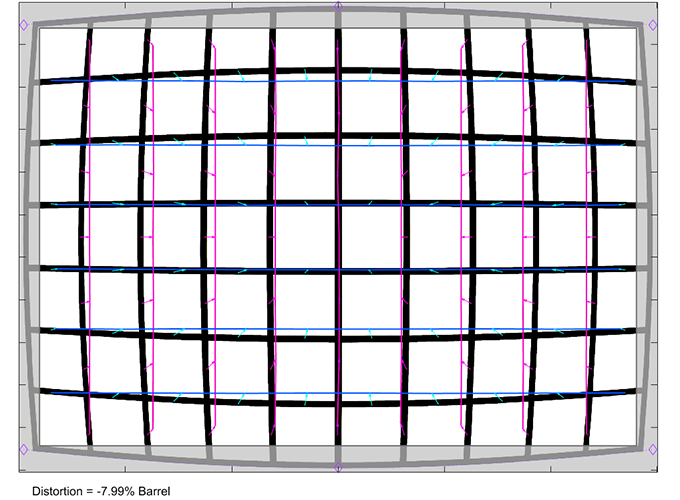
What Is Lens Vignetting? Understanding Relative Illumination in Camera Systems
A camera image can be sharp in the center and still look noticeably weaker toward the corners. One possible reason is vignetting: a reduction in image brightness from the center toward the edge. In a camera module, this may appear as dark corners, uneven exposure or color shading that becomes more o......
Read More
Fixed-Focus vs. Varifocal Lenses: Which Is Better for Your Camera
A camera project can have the right sensor, processor and housing and still deliver the wrong view of the scene. One early decision that strongly influences the result is whether to use a fixed-focus lens or a varifocal lens.
Read More
What Causes Lens Flare and Ghosting in Security Cameras
A security camera can produce a clear image during the day and still struggle when a bright light enters the scene. Streetlights, vehicle headlights, reflective signs, low-angle sunlight, and nearby infrared illuminators can all create unwanted artifacts.
Read More
M12 vs. CS-Mount Lenses: Which Interface Is Right for Your Camera
When a camera engineer compares two lenses, optical specifications usually get most of the attention. Focal length, aperture, field of view, resolution, and distortion are all important. Yet before any of those specifications can be used, the lens has to fit the camera mechanically.
Read More
How Does an IR-Cut Filter Affect Day and Night Camera Imaging
A surveillance camera is expected to produce a natural-looking image in daylight and remain useful after the sun goes down. These two operating conditions create a challenge that is easy to overlook: the image sensor may respond to light beyond the range of human vision.
Read More