
How Can a Distortionless Lens Improve Imaging Accuracy and Optical Performance?
Article Summary
A distortionless lens is designed to eliminate or significantly reduce image distortion, ensuring precise and reliable visual representation. This article explores how distortionless lenses work, their advantages, and how they solve common challenges faced by industries such as machine vision, medical imaging, and precision inspection. By understanding their structure, features, and selection criteria, users can make informed decisions to enhance imaging quality and operational efficiency.
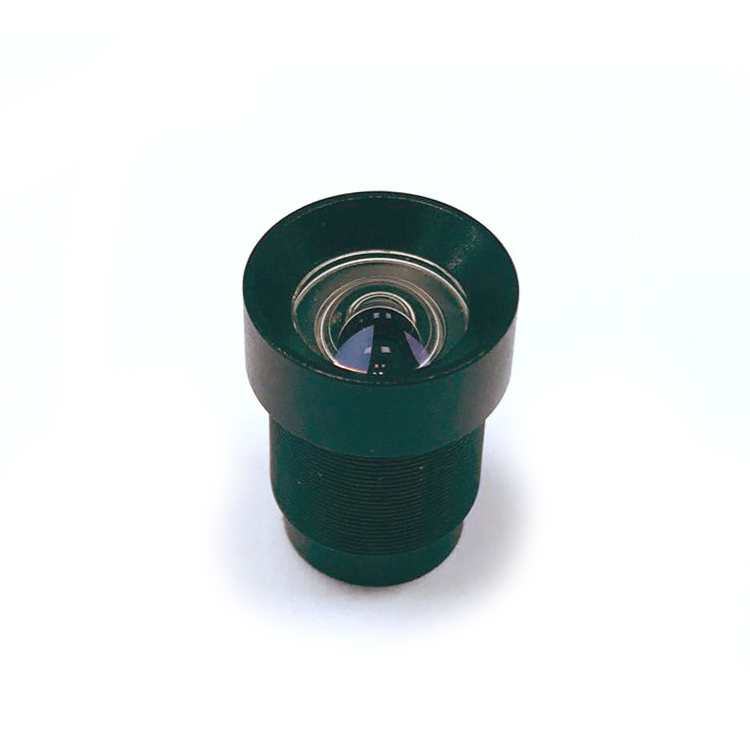
Table of Contents
- 1. What Is a Distortionless Lens?
- 2. How Does a Distortionless Lens Work?
- 3. Common Problems Caused by Lens Distortion
- 4. Key Advantages of Distortionless Lenses
- 5. Technical Specifications and Parameters
- 6. Application Scenarios
- 7. How to Choose the Right Distortionless Lens
- 8. Frequently Asked Questions
- 9. Conclusion
1. What Is a Distortionless Lens?
A distortionless lens is a specialized optical component engineered to produce images with minimal geometric distortion. Unlike standard lenses that may introduce barrel or pincushion distortion, a distortionless lens maintains accurate spatial relationships across the entire image field.
This type of lens is particularly important in applications where measurement precision and visual accuracy are critical. It ensures that straight lines remain straight and object proportions remain consistent, regardless of their position in the frame.
2. How Does a Distortionless Lens Work?
Distortionless lenses utilize advanced optical design techniques and high-precision manufacturing processes to correct distortion at the source. This involves optimizing lens element shapes, spacing, and alignment.
- Use of multiple corrective lens elements
- Precise curvature control to counteract distortion
- High-quality optical glass materials
- Advanced coating technologies to improve clarity
By carefully balancing these factors, the lens ensures that light rays are accurately projected onto the image sensor without deviation.
3. Common Problems Caused by Lens Distortion
Traditional lenses often introduce distortions that can negatively impact performance and decision-making processes.
- Measurement Errors: Inaccurate dimensions in industrial inspection
- Image Warping: Curved lines and inconsistent shapes
- Reduced Data Reliability: Compromised analysis results
- Post-Processing Complexity: Additional software correction required
These issues can lead to increased operational costs and reduced efficiency, especially in high-precision environments.
4. Key Advantages of Distortionless Lenses
Distortionless lenses provide several critical benefits that directly address user pain points.
- High Accuracy: Ensures precise imaging for measurement applications
- Improved Efficiency: Reduces the need for software correction
- Consistent Image Quality: Uniform performance across the field of view
- Enhanced Reliability: Supports stable long-term operation
Manufacturers such as Shanghai Silk Optical Technology Co. Ltd focus on delivering high-performance distortionless lenses tailored to demanding industrial requirements.
5. Technical Specifications and Parameters
| Parameter | Description |
| Distortion Rate | Typically less than 0.1% for high-precision lenses |
| Focal Length | Varies depending on application requirements |
| Aperture | Controls light intake and depth of field |
| Sensor Compatibility | Designed for specific sensor sizes |
| Mount Type | C-mount, CS-mount, or custom interfaces |
| Coating | Anti-reflective coatings for improved transmission |
Understanding these parameters is essential for selecting the correct lens for a given application.
6. Application Scenarios
Distortionless lenses are widely used across industries where accuracy and clarity are non-negotiable.
- Machine Vision: Automated inspection and quality control
- Medical Imaging: Accurate visualization for diagnostics
- Metrology: Precision measurement systems
- Scientific Research: Data-sensitive imaging applications
- Electronics Manufacturing: PCB inspection and alignment
Their ability to deliver distortion-free images makes them indispensable in these fields.
7. How to Choose the Right Distortionless Lens
Selecting the right lens involves evaluating several technical and operational factors.
- Application Requirements: Determine precision and resolution needs
- Sensor Size Compatibility: Ensure proper coverage
- Working Distance: Match lens design to setup conditions
- Lighting Conditions: Consider aperture and coatings
- Mechanical Fit: Verify mounting compatibility
Working with a trusted supplier ensures access to customized solutions and professional support.
8. Frequently Asked Questions
Q1: What is the difference between a standard lens and a distortionless lens?
A standard lens may introduce geometric distortion, while a distortionless lens is specifically designed to eliminate such distortions, ensuring accurate image representation.
Q2: Is a distortionless lens necessary for all applications?
Not always. It is essential for precision-based applications such as measurement and inspection but may not be required for general photography.
Q3: Can distortion be corrected using software instead?
While software correction is possible, it adds processing time and may reduce accuracy. A distortionless lens provides a more reliable and efficient solution.
Q4: How long does a distortionless lens last?
With proper maintenance, high-quality lenses can maintain performance for many years without significant degradation.
9. Conclusion
A distortionless lens plays a vital role in achieving high-precision imaging and reliable data analysis. By eliminating geometric distortion, it enhances accuracy, reduces processing requirements, and improves overall system performance.
Shanghai Silk Optical Technology Co. Ltd offers advanced distortionless lens solutions designed to meet the rigorous demands of modern industries, ensuring consistent quality and dependable results.
If you are looking to upgrade your imaging system with high-performance optical solutions, contact us today to discover how our expertise can support your business and deliver measurable results.