

3 Essential Camera Lenses for Smart Parking Lot Surveillance Systems
Introduction: A Smart Parking System Is Only as Smart as Its Lens
When people design a smart parking lot, they usually discuss:
- AI algorithms
- License plate recognition
- Cloud platforms
- Edge computing
- Camera resolution
But there is one component that is often underestimated:
The lens.
After years working with security camera manufacturers and system integrators, we have seen the same situation repeatedly:
A parking system may have powerful AI software, but if the lens delivers poor-quality images, the entire system becomes unreliable.
A camera cannot recognize what the lens fails to capture.
For smart parking applications, choosing the correct lens is not about finding the “best” lens—it is about selecting the right optical solution for each scenario.
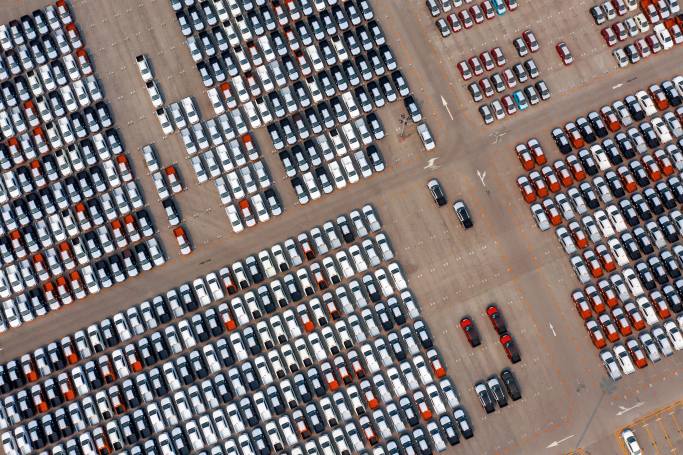
Why Lens Selection Matters in Smart Parking Systems
A modern parking lot has multiple imaging challenges:
- Wide open parking areas require large coverage
- Vehicle entrances require clear identification
- Underground garages suffer from poor lighting
- AI analytics require stable image quality
One single lens cannot perfectly solve every problem.
That is why professional parking solutions usually combine different lens designs according to application requirements.
Below are three essential camera lenses that cover the majority of smart parking scenarios.
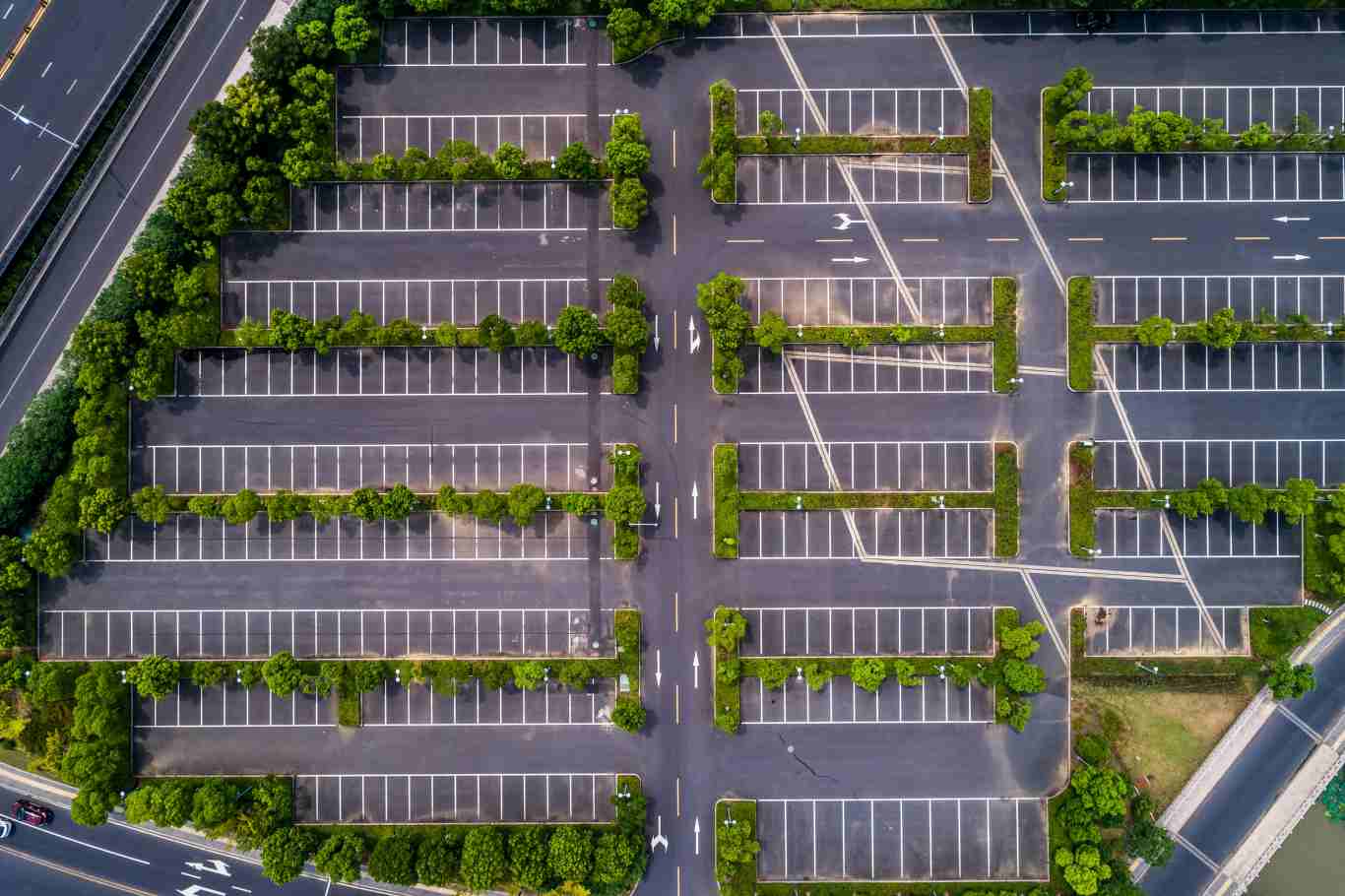
1. PL099 2.8mm F1.6 Ultra-Wide Lens
The Best Choice for Large Parking Area Coverage
A parking lot is a large environment.
The first question engineers usually ask is:
“How can we cover more space with fewer cameras?”
This is where ultra-wide lenses become valuable.
The PL099 2.8mm F1.6 lens is designed for wide-area surveillance applications.
Key Specifications:
- Focal Length: 2.8mm
- Aperture: F1.6
- Resolution: 3MP
- Mount: M12×0.5
- Relative Illumination: >50%
For a 1/2.7" sensor:
- Diagonal FOV: 134°
- Horizontal FOV: 112°
- Vertical FOV: 59°
This extremely wide viewing angle makes PL099 ideal for:
- Parking space monitoring
- Building entrances
- Driveways
- Large indoor parking zones
Why Wide FOV Matters in Parking Applications
A wider lens allows:
- More parking spaces captured in one image
- Reduced camera installation quantity
- Lower infrastructure costs
However, wide angle alone is not enough.
Poorly designed wide lenses often create excessive distortion, causing:
- Bent vehicle shapes
- Difficult AI recognition
- Reduced edge clarity
PL099 balances coverage and image usability through optimized optical design.
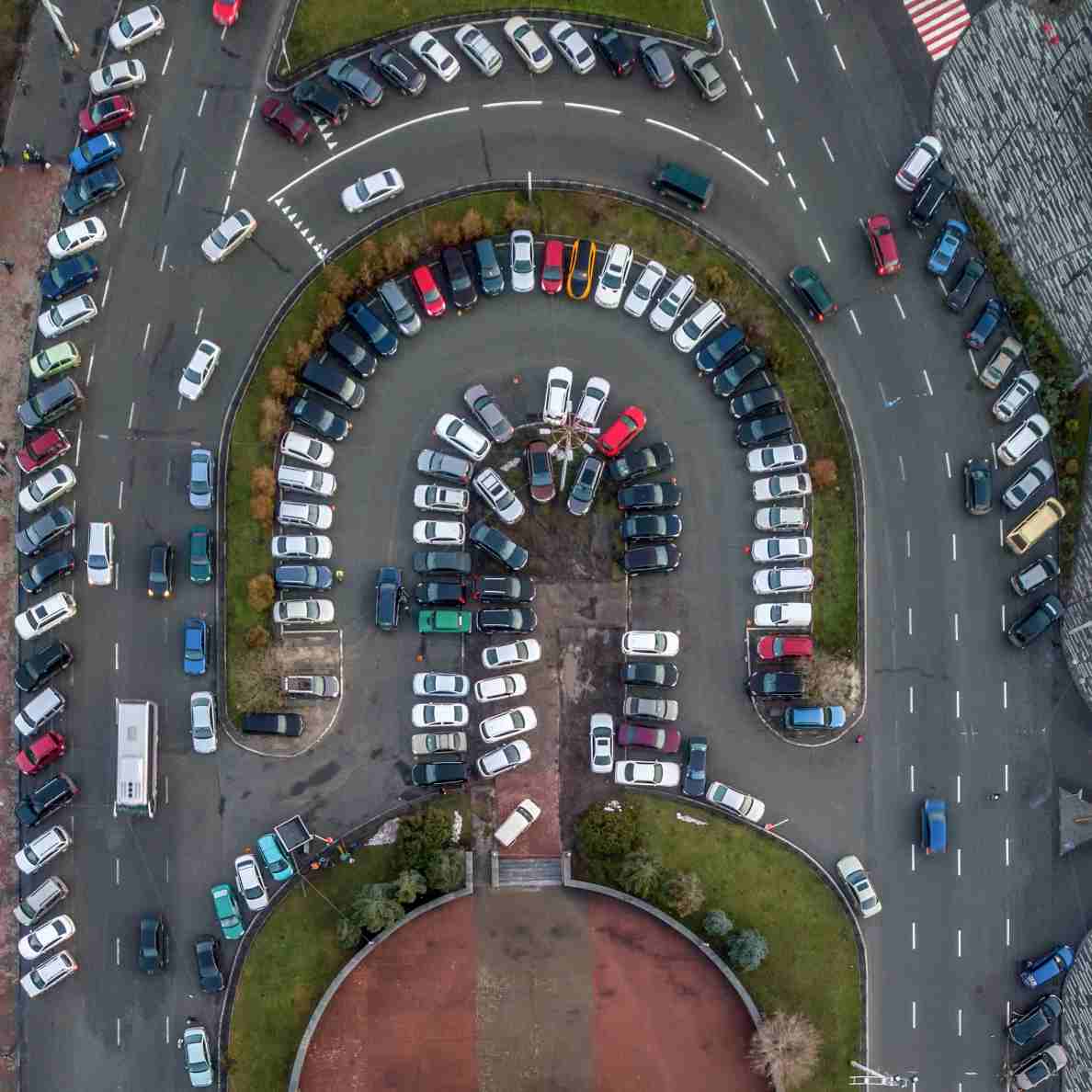
2. PL057 4mm F2.0 Lens
The Balanced Solution for Everyday Parking Surveillance
Not every area requires an extreme wide-angle lens.
Many parking zones need a balanced view:
- Enough coverage
- Controlled distortion
- Clear object details
This is where the PL057 4mm F2.0 lens becomes a practical choice.
Key Specifications:
- Focal Length: 4mm
- Aperture: F2.0
- Structure: 1G3P
- Resolution: 3MP
- Mount: M12×0.5
- Relative Illumination: >50%
For a 1/2.7" sensor:
- Diagonal FOV: 100°
- Horizontal FOV: 83°
- Vertical FOV: 45°
Where PL057 Fits Best
PL057 is suitable for:
- Standard parking lanes
- Pedestrian areas
- Indoor garage monitoring
- Security cameras requiring balanced imaging
Unlike extremely wide lenses, PL057 provides a more natural perspective.
This makes it easier for:
- Human operators to understand scenes
- AI systems to analyze objects
- Security teams to review footage
3. PL100 F1.0 Black Light Lens
The Ultimate Choice for Night and Underground Parking
Now let’s discuss the most challenging environment:
Dark parking areas.
Underground garages, poorly illuminated corners, and night surveillance are where many security systems fail.
The problem is simple:
Less light means:
- More noise
- Lower image detail
- Worse AI recognition
This is where the PL100 F1.0 Black Light Lens changes the game.
Why F1.0 Makes a Real Difference
Most conventional security lenses operate around F1.6–F2.0.
PL100 uses an ultra-large:
F1.0 Aperture
This allows significantly more light to reach the sensor.
The result:
- Brighter night images
- Lower noise
- Better color reproduction
- Improved AI recognition accuracy
PL100 Key Advantages:
- F1.0 ultra-large aperture
- 4mm focal length
- 4MP resolution
- 1/2.7" sensor compatibility
- Wide-angle surveillance capability
- Full-color low-light imaging
Unlike traditional infrared solutions, Black Light technology focuses on capturing available light instead of depending entirely on additional illumination.
Comparing Three Lens Solutions for Parking Surveillance
| Lens | Main Advantage | Best Application |
|---|---|---|
| PL099 2.8mm F1.6 | Ultra-wide coverage | Large parking areas |
| PL057 4mm F2.0 | Balanced imaging | General surveillance zones |
| PL100 F1.0 | Extreme low-light performance | Underground and night parking |
The Future of Smart Parking Depends on Better Optical Input
Smart parking is becoming more intelligent:
- AI vehicle detection
- Automatic parking guidance
- License plate recognition
- Security analytics
- Occupancy monitoring
But all these technologies share one foundation:
High-quality optical data.
A better algorithm cannot completely compensate for poor images.
The lens determines:
- How much information reaches the sensor
- How accurately AI understands the scene
- How reliable the entire system becomes
Conclusion: Choose the Lens According to the Parking Scenario
There is no universal “best” parking surveillance lens.
The right choice depends on the application:
- Need maximum coverage? → PL099 ultra-wide lens
- Need reliable everyday monitoring? → PL057 balanced lens
- Need outstanding night performance? → PL100 F1.0 Black Light Lens
At Shanghai Silk Optical Technology, we believe that smart surveillance starts with smart optics.
From security monitoring and smart cities to automotive vision and AI systems, our goal is simple:
Capture better images, provide better data, and enable smarter decisions.
Final Insight
A smart parking system is not made intelligent by AI alone.
AI thinks with algorithms.
But AI sees through lenses.
And the quality of that vision begins with the right optical design.