
Ultra-Wide FPV Camera Lens for Immersive Drone Racing Experience
Introduction: FPV Is Not About Seeing—It’s About Feeling the Flight
If you talk to real FPV pilots—not spec sheet readers—they will tell you something very simple:
“The best FPV lens doesn’t show you the world. It puts you inside it.”
That is exactly where most lenses fail.
They either:
- look sharp but feel narrow
- look wide but distort control
- perform well in daylight but collapse in dusk racing
The PL106C ultra-wide FPV lens was designed for a very specific type of pilot:
The one who cares more about immersion, control feel, and real racing performance than lab numbers.
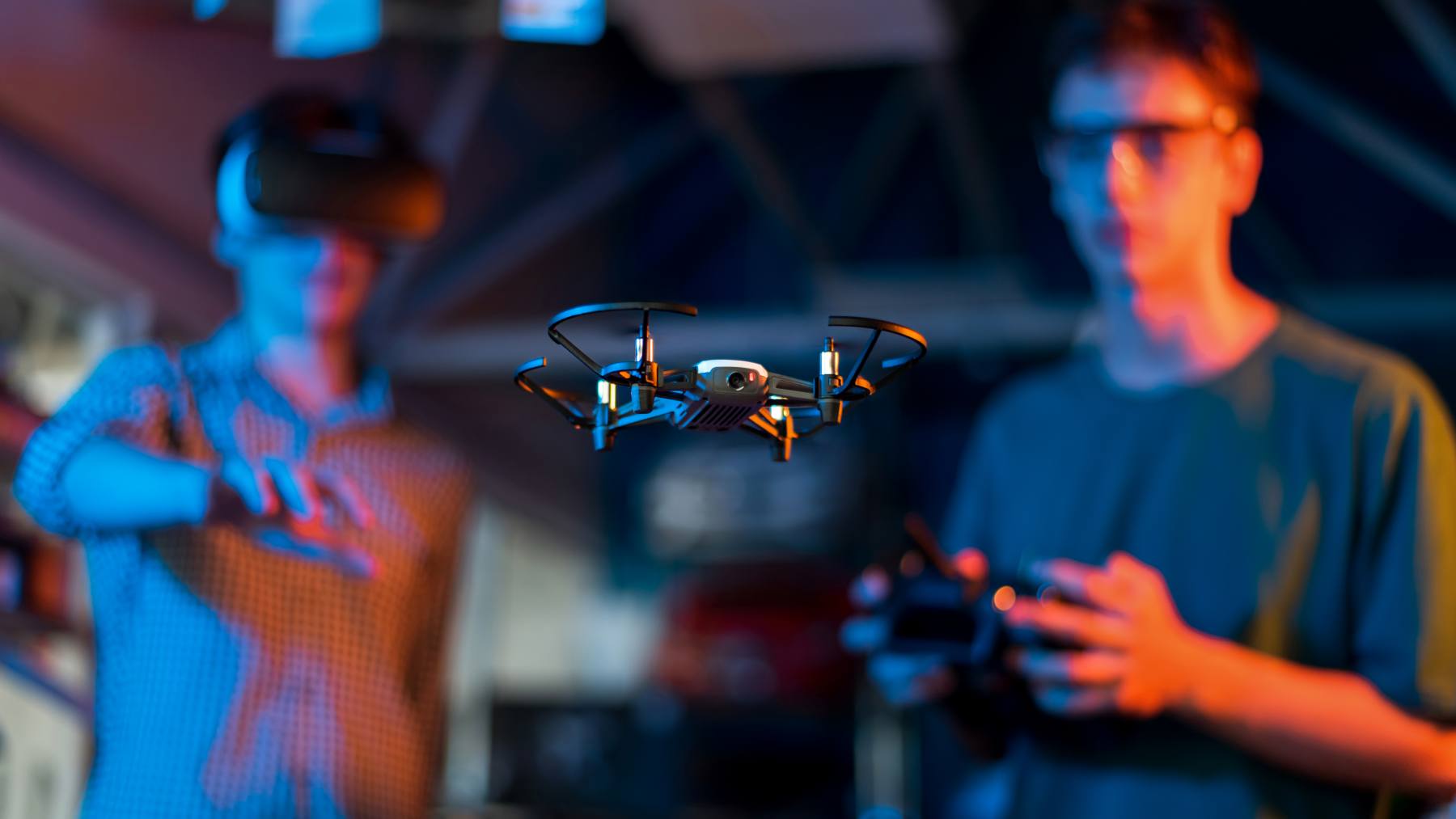
1. True FPV Experience Starts With Field of View (FOV)
In FPV racing, FOV is not a specification—it is a perception system.
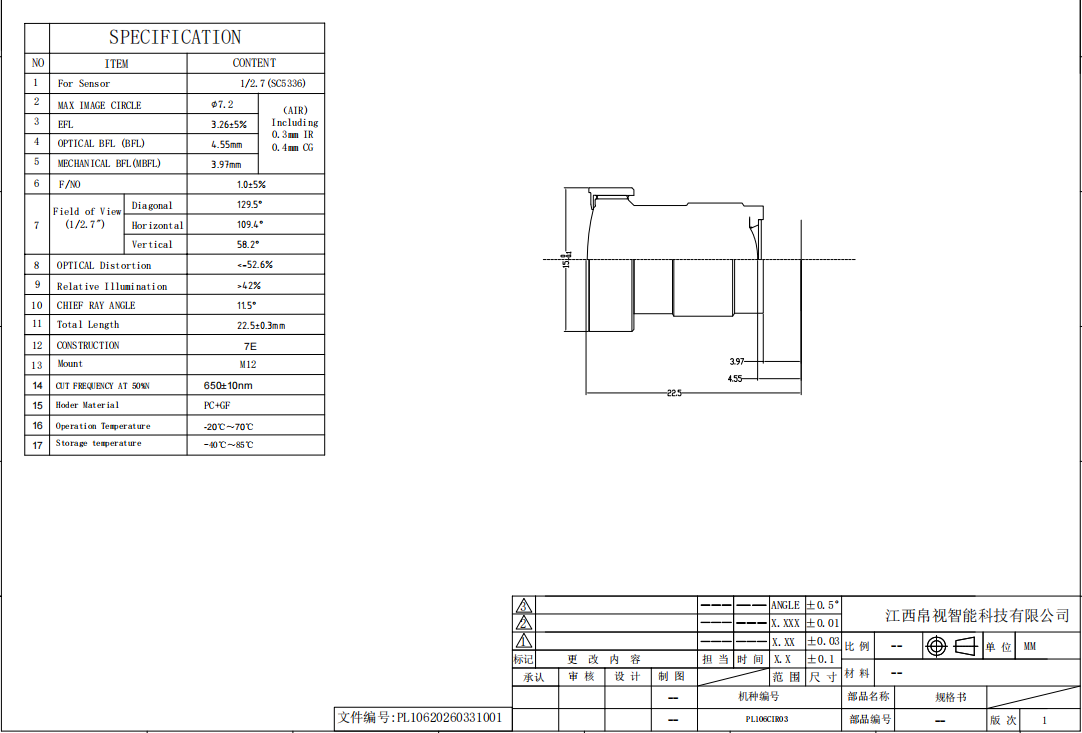
The PL106C delivers:
- Horizontal FOV: 109.4°
- Diagonal FOV: 129.5°
- Vertical FOV: 58.2°
This creates a visual effect that is close to natural human peripheral vision.
Why this matters in FPV:
- Better spatial awareness in tight gates
- Faster obstacle reaction
- Improved racing line judgment
- Stronger “immersion feeling”
In simple terms:
Wider FOV = faster brain response in high-speed flight
2. The Honest Truth About Ultra-Wide FPV Lenses
Let’s be real.
Most ultra-wide FPV lenses fall into two categories:
- too soft at the edges
- or too distorted to control properly
The PL106C is intentionally designed with:
- controlled fisheye distortion (~ -52.6%)
- optimized image balance
- stable center sharpness for racing focus
Because in FPV racing:
You don’t need a perfect image—you need a usable one at 120 km/h.
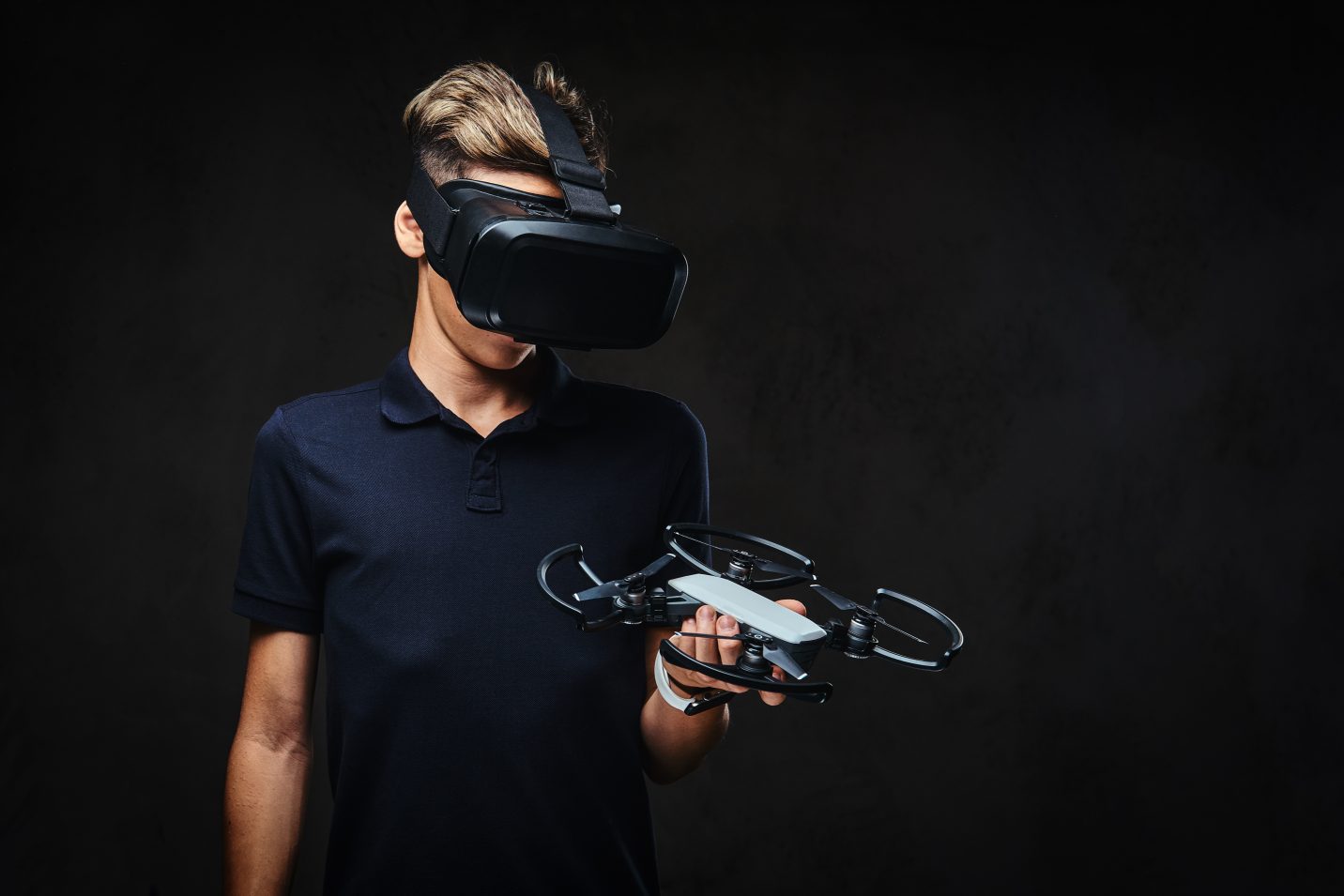
3. F1.0 Aperture: The Difference Between Day Racing and Night Survival
FPV pilots don’t only fly under perfect sunlight.
Real conditions include:
- sunset racing
- indoor tracks
- forest environments
- cloudy weather
- early morning flights
The PL106C uses F1.0 ultra-large aperture, meaning:
- more light intake
- lower motion noise
- improved low-light visibility
- better sensor performance under stress
Practical impact:
You don’t “lose the track” when lighting drops.
You just keep flying.
4. Why Relative Illumination Matters More Than You Think
PL106C delivers:
- >42% relative illumination
In FPV terms, this means:
- less dark corner collapse
- more consistent edge visibility
- better object detection in peripheral zones
Most pilots don’t notice this spec on paper—but they absolutely feel it in flight.
Because uneven brightness = inconsistent reaction time.
5. SC5336 Sensor Optimization: Built for Real FPV Systems
The lens is optimized for:
- 1/2.7" SC5336 sensor format
This ensures:
- full image circle utilization
- reduced vignetting issues
- better edge-to-center balance
In real FPV systems, sensor mismatch is one of the most common causes of “weird image feel.”
PL106C is designed to avoid that problem entirely.
6. IR Cut Filter (650nm) for True Color FPV Racing
Unlike generic wide-angle lenses, PL106C includes:
- 650±10nm IR-cut filter
This ensures:
- natural color reproduction
- better depth perception
- improved racing environment recognition
Because in FPV racing:
Color is not aesthetic—it is spatial information.
7. Why This Lens Feels Different in Real Flight
From a pilot perspective, PL106C delivers something very specific:
- You feel speed more naturally
- You judge turns earlier
- You recover mistakes faster
- You “see through” gates instead of just seeing them
That is not marketing—it is optical behavior.
8. Applications Beyond FPV Racing
While designed for immersive FPV, PL106C also performs strongly in:
- UAV inspection drones
- AI-assisted flight systems
- First-person robotics vision
- Security drones (wide-area monitoring)
- Experimental autonomous flight platforms
Because ultra-wide + low-light + stable distortion = universal drone vision capability.
Conclusion: FPV Is Becoming a Vision Engineering Problem
FPV used to be about speed and control.
Now it is becoming:
a combination of optics, latency, and perception engineering.
And in that equation, the lens is no longer a passive component—it is the driver of experience.
The PL106C ultra-wide FPV lens is designed for one thing:
To make pilots feel like they are inside the air, not just looking at it.
Final Insight
In FPV racing:
The fastest pilot is not the one with the best drone.
It is the one with the clearest perception at speed.