

Why Poor Low-Light Imaging Reduces AI Recognition Accuracy
Introduction
Artificial intelligence has rapidly transformed surveillance, industrial automation, and smart transportation. However, there is one harsh truth often overlooked in the industry: AI is only as good as the image it sees.
When lighting conditions drop, many imaging systems struggle—and so does AI performance. This is where optical design becomes critical. At Shanghai Silk Optical Technology, we often say: “Bad light creates bad data, and bad data creates unreliable intelligence.”
Let’s explore why low-light imaging severely impacts AI recognition accuracy—and how advanced optics like the PL100 F1.0 Black Light Lens help solve this problem.
AI Does Not “See”—It Calculates from Pixels
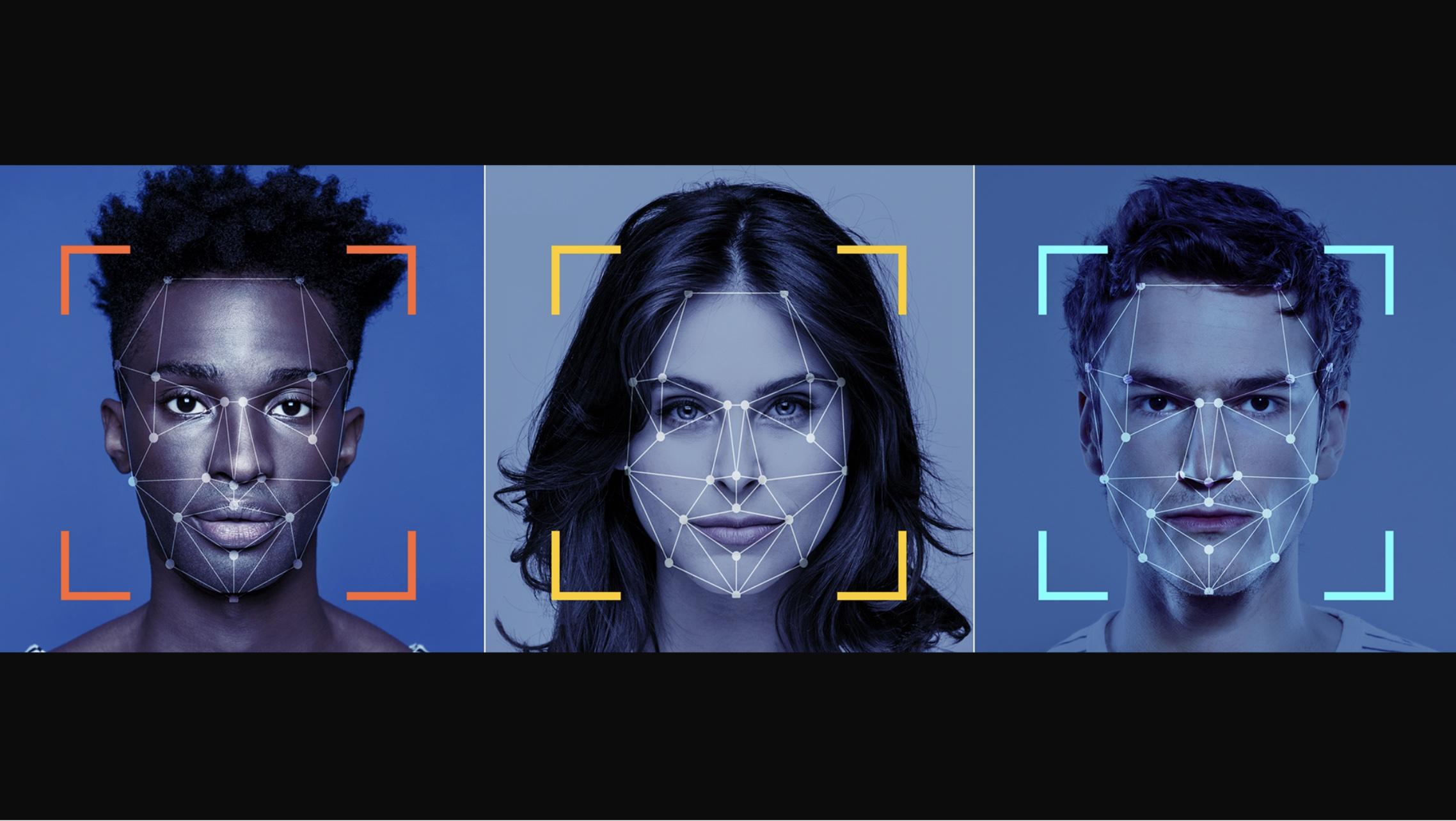
Unlike humans, AI does not interpret scenes emotionally or contextually. It relies entirely on:
- Pixel clarity
- Contrast information
- Edge definition
- Color or grayscale consistency
- Signal-to-noise ratio (SNR)
When low-light conditions degrade these inputs, AI models begin to fail in predictable ways.
The Core Problem: Noise Over Signal
In poor lighting conditions, camera sensors amplify signals to compensate. This leads to:
- Increased image noise
- Blurred edges
- Color distortion
- Loss of texture details
From an AI perspective, this is catastrophic.
A neural network trained to detect:
- Faces
- Vehicles
- License plates
- Human movement
…will struggle when the input data becomes unstable or inconsistent.
Even a small drop in image quality can significantly reduce detection confidence scores.
Why Low-Light Conditions Break AI Models
1. Feature Loss
AI detection relies on key visual features such as edges and textures. In low light:
- Faces lose contour definition
- Vehicles lose reflective edges
- Objects blend into the background
Without clear features, AI has nothing reliable to classify.
2. False Positives Increase
Noise in low-light images creates random patterns that AI may misinterpret as objects.
Result:
- More false alarms
- Lower system trust
- Increased human verification workload
3. Motion Artifacts Become Severe
In dim environments, cameras often increase exposure time:
- Moving objects become blurred
- AI tracking algorithms lose continuity
- Behavioral analysis becomes unstable
4. Color Information is Lost (or corrupted)
Color is critical for AI classification in:
- Traffic systems (vehicle detection)
- Retail analytics (object segmentation)
- Security (clothing identification)
Infrared systems often eliminate color entirely, reducing classification richness.
Infrared Imaging: Powerful but Limited for AI
Infrared (IR) systems perform well in total darkness, but they introduce AI challenges:
- Monochrome imaging reduces feature diversity
- Reflective IR hotspots distort scene geometry
- Material differences become harder to distinguish
- Training datasets often mismatch real IR environments
In short: IR helps “see in the dark,” but not always “understand in the dark.”
Why Black Light F1.0 Imaging Improves AI Accuracy
This is where Black Light F1.0 technology fundamentally changes the equation.
Unlike IR systems, lenses like Shanghai Silk Optical’s PL100 maximize visible light capture using optical design rather than artificial illumination.
Key Advantages:
1. Higher Signal-to-Noise Ratio (SNR)
The F1.0 ultra-large aperture allows more photons to reach the sensor:
- Less sensor gain required
- Lower noise
- Cleaner AI input data
2. Natural Color Retention
AI benefits significantly from full RGB information:
- Better object classification
- Improved re-identification accuracy
- More reliable behavior analysis
3. Improved Edge Sharpness
Advanced optical design (aspherical elements + low distortion control) ensures:
- Strong feature extraction
- Stable object boundaries
- Better deep learning performance
4. Better Dataset Compatibility
Most AI models are trained on visible-light datasets. Black Light imaging:
- Matches training data better than IR
- Improves real-world deployment accuracy
- Reduces model retraining cost
PL100 Lens: Built for AI Vision Performance
The PL100 F1.0 Black Light Lens from Shanghai Silk Optical Technology is designed specifically to bridge the gap between optics and AI intelligence.
Key characteristics:
- F1.0 ultra-large aperture
- 4MP high-resolution imaging
- Optimized for low-light full-color capture
- Low distortion optical architecture
- Stable imaging for machine vision systems
It is widely applicable across:
- Smart surveillance systems
- AI-powered traffic monitoring (ITS)
- Drone inspection systems
- Industrial machine vision
- Automotive ADAS cameras
- Smart city infrastructure
The Real Conclusion: AI Needs Better Light, Not Just Better Algorithms
Many companies invest heavily in AI models, but overlook the most fundamental requirement: high-quality optical input.
If the image is poor:
- AI confidence drops
- False detections increase
- System reliability collapses
If the image is clean:
- AI becomes dramatically more accurate
- Operational costs decrease
- Decision-making improves
Final Thoughts
Poor low-light imaging is not just a camera limitation—it is an AI performance bottleneck. Infrared systems help in darkness, but often at the cost of detail and color. In contrast, Black Light F1.0 optics, like the PL100 lens, preserve the richness of real-world data that AI systems depend on.
In modern vision systems, one truth is becoming increasingly clear:
Better optics = better AI.