

Advanced Camera Lens Technology for Embodied AI Robots: Enabling Smarter Machine Vision
Introduction: The Future of Robots Depends on Their Eyes
The robotics industry is entering a new era.
For decades, robots were designed to repeat predefined actions:
- Move along fixed paths
- Perform the same assembly task
- Operate in controlled environments
But embodied AI robots are different.
They are expected to:
- Understand their surroundings
- Navigate unknown environments
- Interact naturally with humans
- Make decisions independently
A robot that can think but cannot accurately perceive the world is still limited.
This leads to a simple truth:
Intelligence begins with perception, and perception begins with optics.
Before an AI model processes information, before a robot makes a decision, the lens is already determining what the robot can understand.
1. Why Optical Systems Are the Foundation of Embodied Intelligence
Many discussions about embodied AI focus on:
- Large language models
- AI algorithms
- Computing power
- Robot hardware
However, experienced engineers understand one important limitation:
AI cannot understand what it cannot see.
A robot’s vision system must continuously provide information about:
- Objects
- People
- Distance
- Movement
- Environment changes
This requires optical systems that can deliver:
- High-quality images
- Stable performance
- Low distortion
- Reliable operation under different lighting conditions
The camera lens is not just a component.
It is the robot’s connection to the physical world.
2. The Biggest Challenge: Robots Must See in the Real World, Not a Laboratory
Laboratory environments are easy.
Real environments are not.
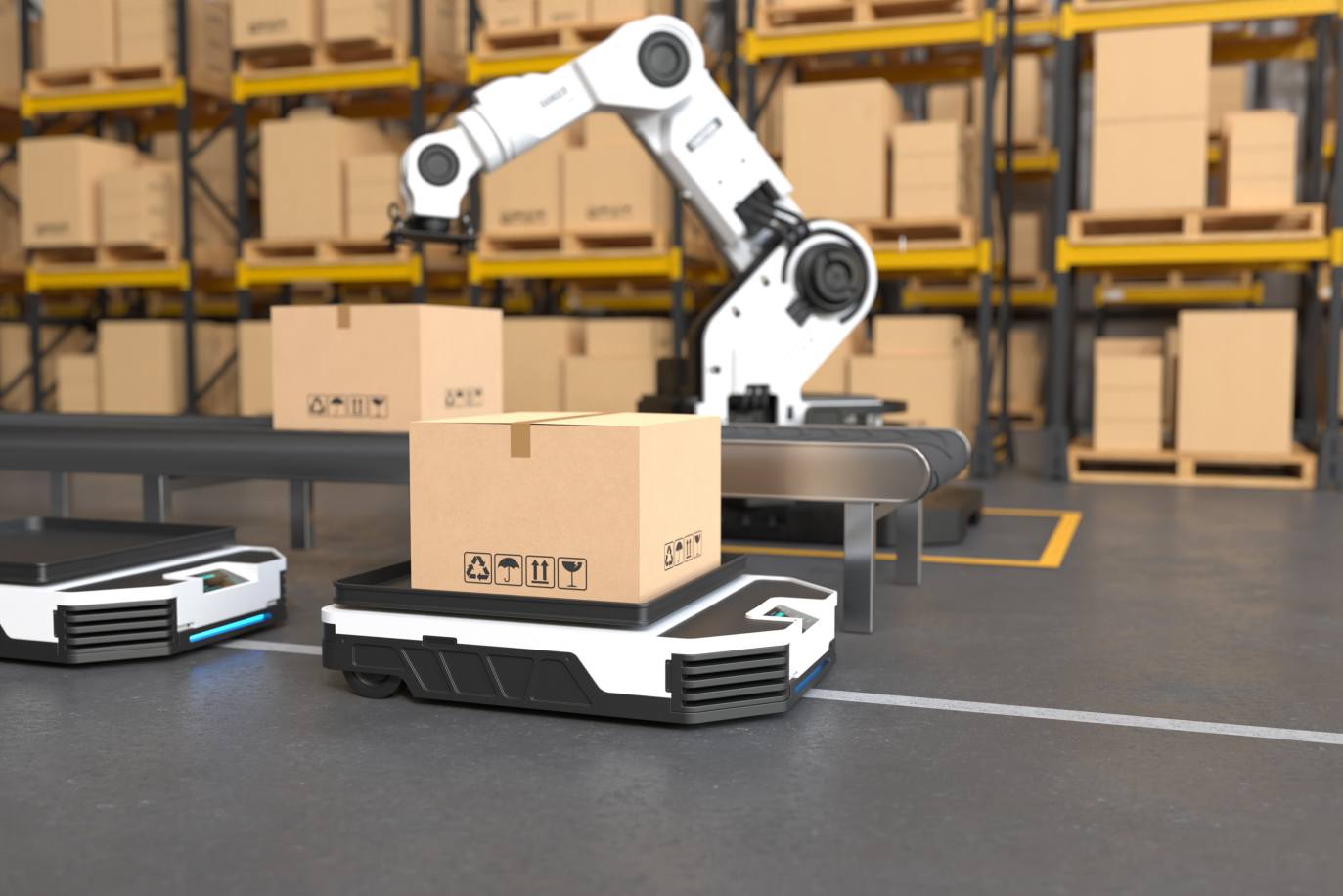
A household robot, service robot, or industrial robot may encounter:
- Bright sunlight near windows
- Dark corners
- Changing shadows
- Moving objects
- Reflective surfaces
- Complex backgrounds
Human vision adapts naturally.
Robots need optical engineering to help them adapt.
This is why lens selection has become a critical factor in embodied AI development.
3. Wide-Angle Vision: Giving Robots Better Environmental Awareness
A robot does not only need to recognize objects in front of it.
It needs to understand the entire environment.
Wide-angle lenses provide:
- Larger perception range
- Better obstacle awareness
- Improved navigation capability
- Reduced blind spots
For mobile robots, autonomous platforms, and drones, a wider field of view helps AI systems understand spatial relationships faster.
However, there is a common mistake:
A wider lens does not automatically mean better vision.
Poorly designed ultra-wide lenses create:
- Excessive distortion
- Deformed objects
- Unstable AI recognition
Professional robotic vision requires a balance between:
- Field of view
- Image clarity
- Distortion control
4. Low-Light Vision: The Hidden Challenge for Intelligent Robots
Many robotic applications operate beyond perfect lighting conditions.
Examples include:
- Warehouse robots working at night
- Security robots patrolling buildings
- Delivery robots operating in the evening
- Inspection robots entering dark environments
Low light creates serious problems:
- Increased image noise
- Lost details
- Reduced object recognition accuracy
This is where advanced optical design becomes valuable.
5. F1.0 Large Aperture Technology for Robot Perception
For embodied AI robots, every photon matters.
A larger aperture allows more light to reach the sensor.
The F1.0 lens technology used in products such as Shanghai Silk Optical’s PL100 Black Light Lens demonstrates how optical innovation improves intelligent vision.
Benefits include:
- Higher light transmission
- Reduced sensor noise
- Better nighttime imaging
- More reliable AI input
For robots, this means:
- More accurate object detection
- Better navigation in dim environments
- Improved human-robot interaction
The goal is not simply to make images brighter.
The goal is to make machine understanding more reliable.
6. Why Image Quality Directly Affects Robot Intelligence
A common misunderstanding is:
“AI models are powerful enough to fix poor images.”
In reality, this is only partially true.
Poor optical input creates problems such as:
Object Recognition Errors
A robot may confuse:
- Different objects
- Similar shapes
- Background elements
-
Navigation Failures
Poor visual information affects:
- Obstacle avoidance
- Position estimation
- Path planning
-
Human Interaction Problems
Service robots need accurate perception of:
- Human position
- Facial features
- Body movement
Better optics create better AI decisions.
7. Camera Lens Requirements for Embodied AI Robots
Future robot vision systems require lenses with:
Wide Compatibility
Supporting various sensors and platforms:
- Robot cameras
- Autonomous systems
- UAV platforms
- Industrial vision modules
Compact Design
Robots have strict size limitations.
M12 lenses and compact optical modules provide:
- Lightweight structure
- Easy integration
- Flexible design options
High Reliability
Robots operate continuously.
Optical systems must support:
- Stable focus
- Temperature variation
- Long operating cycles
8. Shanghai Silk Optical: Optical Solutions for Intelligent Machines
Shanghai Silk Optical Technology provides optical solutions for emerging intelligent applications.
Our products support:
- Embodied AI robots
- Machine vision systems
- UAV platforms
- Security monitoring
- Automotive vision
- Medical imaging
With experience in optical design and manufacturing, Shanghai Silk Optical helps customers transform AI concepts into reliable vision products.
Future Vision: Robots Will Become Smarter When They See Better
The next generation of robots will not simply execute commands.
They will:
- Observe
- Learn
- Adapt
- Interact
But every intelligent action begins with perception.
And perception begins with light entering a lens.
Conclusion: The Lens Is the First Step Toward Robot Intelligence
The future of embodied AI is not only a competition of algorithms.
It is also a competition of perception quality.
A smarter robot requires:
- Better sensors
- Better AI models
- Better mechanical design
But before all of these:
It requires better eyes.
Advanced camera lens technology is becoming one of the key foundations of robotic intelligence.
Because in the world of embodied AI:
The quality of vision determines the quality of intelligence.
Final Insight
A robot without vision is just a machine following instructions.
A robot with advanced optical perception can begin to understand the world.
Better optics. Better perception. Smarter machines.