

Building Smarter Parking Systems with Advanced Camera Lens Technology
Introduction: The Hidden Technology Behind Smart Parking
When people imagine a smart parking system, they usually think about:
- AI algorithms
- License plate recognition
- Cloud platforms
- Automatic payment systems
- Mobile applications
But behind every intelligent parking solution, there is a technology that determines whether the entire system succeeds:
The camera lens.
After working with optical solutions for years, we have learned an important lesson:
A smart parking system cannot be smarter than the images it receives.
AI can analyze thousands of frames per second, but it cannot recover details that were never captured. A blurred vehicle, unclear license plate, or noisy night image becomes a problem long before the algorithm begins processing.
This is why advanced camera lens technology has become one of the most important foundations of modern smart parking systems.
1. Smart Parking Starts with High-Quality Visual Data
A traditional parking camera only needs to “record.”
A smart parking camera needs to “understand.”
Modern parking systems require cameras to perform tasks such as:
- Vehicle detection
- License plate recognition
- Parking space occupancy analysis
- Traffic flow monitoring
- Pedestrian detection
- Security event analysis
All of these applications depend on image quality.
The lens directly influences:
- Light collection capability
- Field of view
- Image distortion
- Edge clarity
- Color accuracy
In other words:
The lens is not just an accessory. It is the first decision-maker in the AI vision chain.
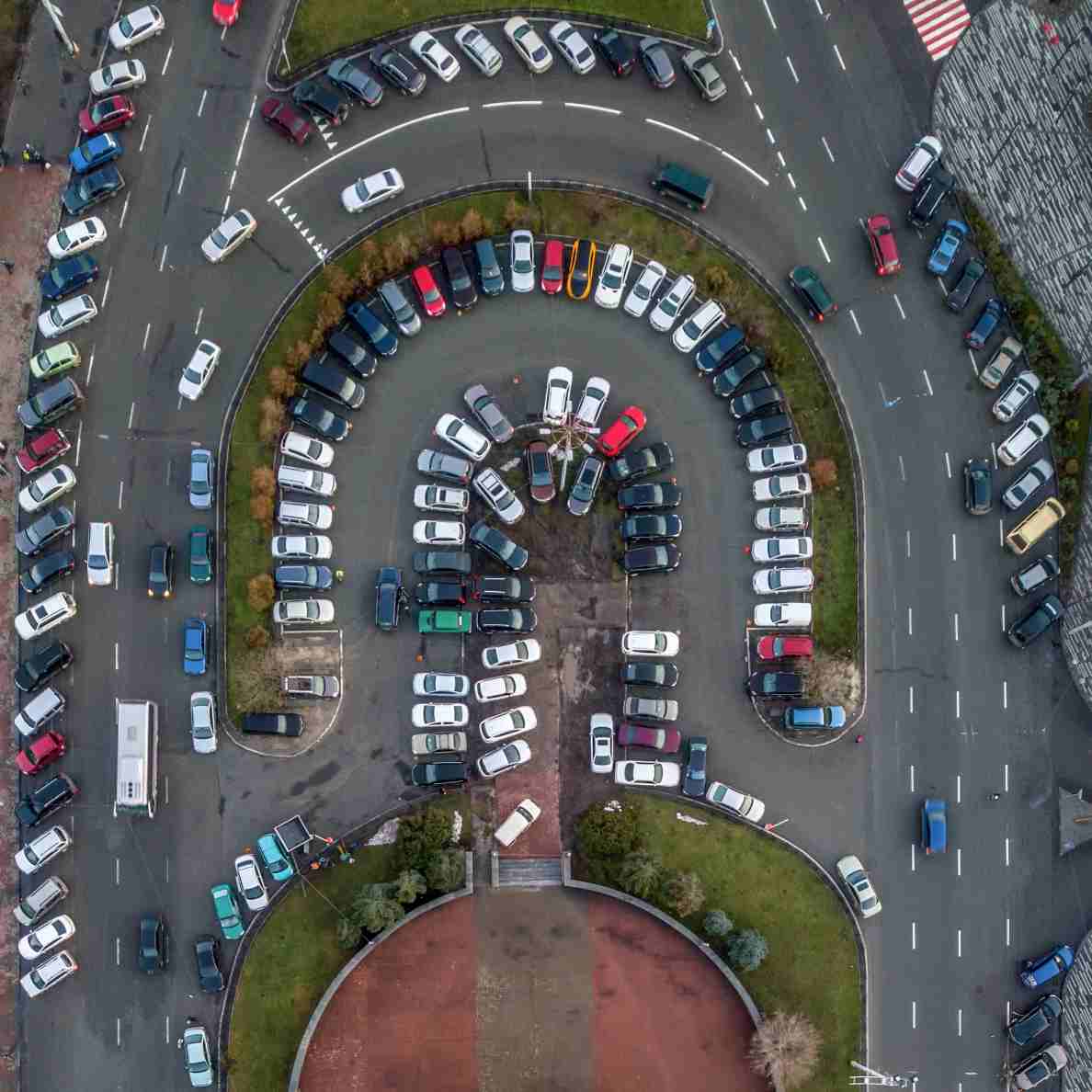
2. The Biggest Challenge: Parking Environments Are Optically Difficult
Parking environments are not simple imaging scenes.
A professional parking surveillance system must handle:
Changing Lighting Conditions
A parking lot may experience:
- Bright sunlight during the day
- Shadows between buildings
- Artificial lighting at night
- Completely dark underground areas
A lens designed only for ideal lighting will fail in real-world conditions.
Complex Viewing Angles
Parking areas contain:
- Wide open spaces
- Narrow driving lanes
- Vehicle entrances
- Underground corners
Different scenarios require different optical solutions.
A wide-angle lens may cover more area but introduce distortion.
A narrow lens may provide more detail but create blind spots.
The challenge is finding the right balance.
3. Wide-Angle Lens Technology: Cover More with Fewer Cameras
One major goal of smart parking design is reducing infrastructure cost without sacrificing coverage.
Ultra-wide lenses help achieve this by capturing larger areas.
For example, Shanghai Silk Optical’s PL099 2.8mm F1.6 lens is designed for wide-area surveillance applications.
Key specifications include:
- 2.8mm focal length
- F1.6 aperture
- 3MP resolution
- M12×0.5 mount
- Relative illumination >50%
For a 1/2.7" sensor, PL099 provides:
- 134° diagonal FOV
- 112° horizontal FOV
- 59° vertical FOV
This makes it suitable for:
- Parking space monitoring
- Vehicle movement tracking
- Large indoor parking areas
- Entrance and exit surveillance
A wider field of view means:
- More coverage per camera
- Fewer installation points
- Lower system deployment cost
-
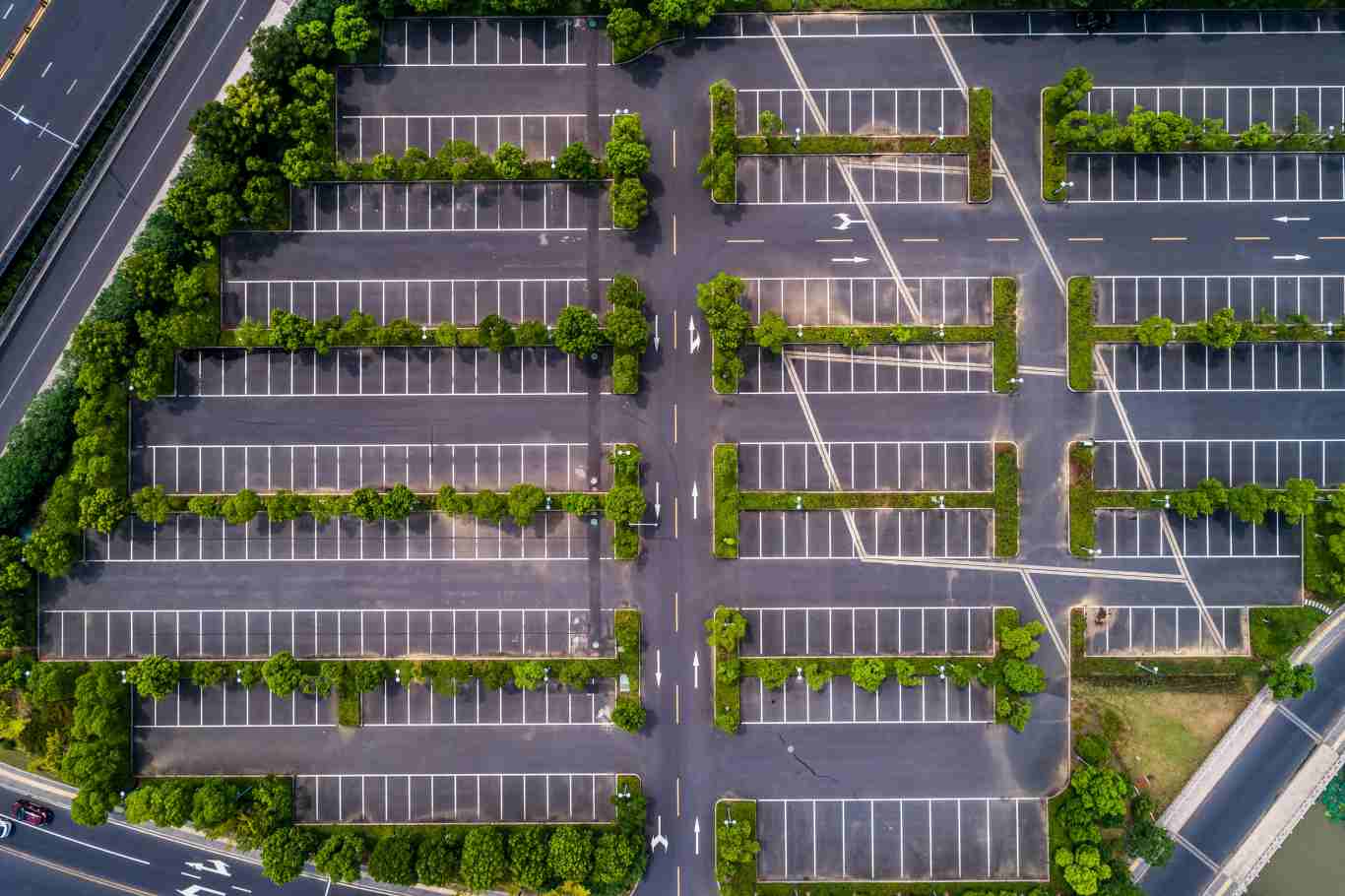
4. Balanced Imaging: The Importance of the Right Perspective
Not every parking application needs extreme wide-angle coverage.
Some areas require a more natural perspective:
- Parking lanes
- Pedestrian zones
- Vehicle pathways
- General security monitoring
For these scenarios, the PL057 4mm F2.0 lens provides a balanced solution.
Key specifications:
- 4mm focal length
- F2.0 aperture
- 3MP resolution
- M12×0.5 mount
- Relative illumination >50%
For a 1/2.7" sensor:
- 100° diagonal FOV
- 83° horizontal FOV
- 45° vertical FOV
Compared with extreme wide-angle lenses, PL057 offers:
- More natural image geometry
- Better object proportion
- Easier human interpretation
- Stable AI recognition performance
Sometimes the smartest choice is not seeing everything—it is seeing the right thing clearly.
5. Low-Light Intelligence: Why F1.0 Lens Technology Matters
Nighttime remains one of the biggest challenges for smart parking.
Many systems rely on infrared illumination, but AI-based applications increasingly require more natural image information.
This is where F1.0 Black Light Lens technology provides a significant advantage.
Shanghai Silk Optical’s PL100 Black Light Lens is designed for demanding low-light applications.
Its key advantages include:
- F1.0 ultra-large aperture
- 4mm focal length
- 4MP resolution
- Full-color low-light imaging
- Enhanced photon collection capability
Why Aperture Changes Smart Parking Performance
A lens with a larger aperture allows more light to reach the sensor.
Compared with conventional lenses, F1.0 technology helps achieve:
- Lower image noise
- Better nighttime details
- Faster exposure response
- Improved AI recognition accuracy
This is especially valuable in:
- Underground parking garages
- Outdoor parking lots at night
- Areas with weak illumination
- Security-sensitive locations
6. Better Optics Means Better AI Decisions
Many companies focus heavily on AI software.
But experienced engineers understand one simple fact:
AI cannot create information. It can only process the information it receives.
Poor optical input causes:
- Lower recognition confidence
- More false alarms
- Lost tracking targets
- Unstable analytics results
Advanced lens technology improves AI performance by providing:
- Clearer edges
- Better contrast
- More consistent images
- Higher-quality training data
The future of smart parking is not only about smarter algorithms.
It is about smarter optical systems.
7. Beyond Parking: Optical Technology Enabling Smart Cities
Advanced parking lenses are part of a larger intelligent vision ecosystem.
The same optical technologies are being applied in:
- Smart transportation
- Traffic monitoring
- Autonomous vehicles
- Industrial automation
- Drone inspection
- Security infrastructure
As cities become more connected, demand for reliable optical input will continue to grow.
How Shanghai Silk Optical Supports Smart Parking Innovation
Shanghai Silk Optical Technology provides optical solutions for intelligent vision applications, including:
- Security surveillance lenses
- Automotive camera lenses
- AI vision lenses
- Drone lenses
- Medical imaging lenses
- Customized optical solutions
With optical design capability and large-scale manufacturing experience, Shanghai Silk Optical helps partners build reliable imaging systems for global markets.
Conclusion: Smarter Parking Begins with Smarter Optics
The future of parking is not just about installing more cameras.
It is about creating systems that can:
- Understand vehicles
- Analyze environments
- Make intelligent decisions
- Operate reliably day and night
And every intelligent decision starts with one thing:
A clear image.
Advanced camera lens technology is becoming the foundation of smart parking innovation.
Because before AI can think, it must first see.
Final Insight
A parking camera is not simply a device that records.
It is the eyes of an intelligent system.
And in the era of AI-driven cities:
Better vision creates smarter decisions.