
Beyond Megapixels: What Really Determines Camera Lens Resolution
There is a specification that appears on almost every modern camera datasheet:
Megapixels.
5MP. 8MP. 12MP. 24MP.
The number is easy to understand, easy to compare, and very easy to market.
But if you have spent enough time developing camera systems, you eventually run into an uncomfortable question:
Can the lens actually resolve what the sensor is capable of capturing?
This is where things get more interesting.
An 8MP sensor does not automatically give you an 8MP-quality image. The sensor provides the sampling capability, but the lens has to deliver enough optical detail for those pixels to be useful.
In other words, a camera is not a competition between sensor megapixels.
It is a system.
And the lens is one of the most important parts of that system.
Sensor Resolution vs. Optical Resolution
Let's start with a simple distinction.
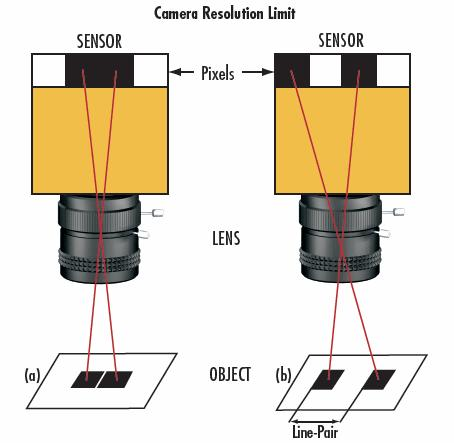
Sensor resolution describes how many pixels the sensor has.
Optical resolution describes how much spatial detail the lens can actually reproduce.
These two specifications are related, but they are not the same thing.
Imagine photographing a distant license plate.
An 8MP sensor may have plenty of pixels available to record the plate. But if the lens produces a low-contrast, blurry image, those pixels cannot magically reconstruct the characters.
You may end up with more pixels describing the blur.
That is not the same as more detail.
This is why simply putting a high-resolution sensor behind an old or poorly matched lens can produce disappointing results.
The sensor may be new.
The image may not be.
Pixel Size Changes the Optical Challenge
Another factor that engineers increasingly need to consider is pixel size.
As sensor technology advances, manufacturers can fit more pixels into the same physical area.
That sounds like an obvious improvement.
But there is a trade-off.
Smaller pixels mean the optical system may need to reproduce finer details to take full advantage of the sensor.
For example, a camera using a relatively large pixel pitch may be less demanding on the lens than a sensor with extremely small pixels and a much higher pixel density.
This creates an important question during camera development:
Is the lens resolution high enough for the sensor's pixel pitch?
A lens that performed perfectly well with an older sensor may not automatically deliver the same practical performance when paired with a newer, denser sensor.
This is one reason lens selection should happen together with sensor selection rather than treating the lens as an afterthought.
Why MTF Matters More Than a Megapixel Label
If you want to understand real optical resolution, eventually you need to talk about MTF — Modulation Transfer Function.
The terminology sounds intimidating.
The basic idea isn't.
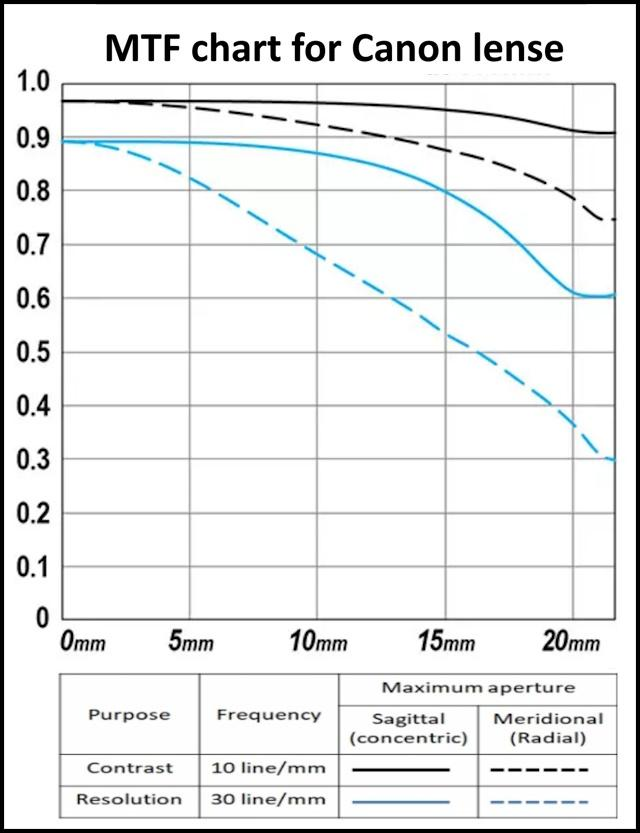
MTF describes how well an optical system preserves contrast at different levels of detail.
Think about photographing a series of increasingly fine black-and-white lines.
At large, easy-to-see patterns, almost any decent lens can reproduce them.
As the lines become finer, the lens gradually loses contrast.
A strong optical system maintains useful contrast further into the fine-detail range.
That is what MTF helps engineers evaluate.
This is why a serious lens specification should not stop at:
“Supports 8MP.”
A better evaluation asks:
What is the MTF performance?
At which spatial frequencies?
How does it perform at the center?
What happens toward the edge?
Does performance remain stable at the intended aperture?
Those questions tell you much more about the actual optical system.
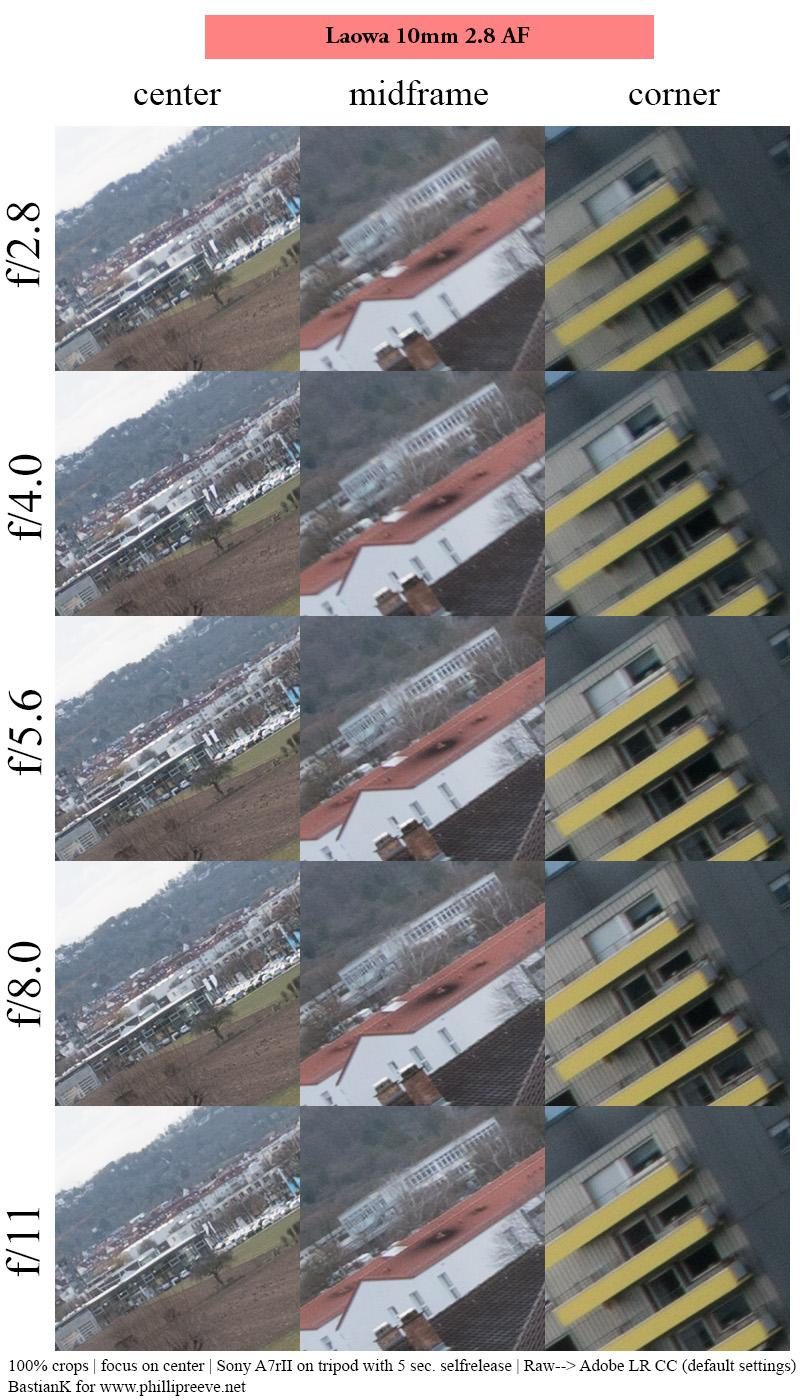
Center Resolution Is Not the Whole Story
One of the easiest ways to make a lens look impressive is to show a very sharp center image.
The problem is that cameras do not only photograph the center.
Wide-angle security cameras, automotive cameras, drone cameras, and robotics systems often depend heavily on peripheral image information.
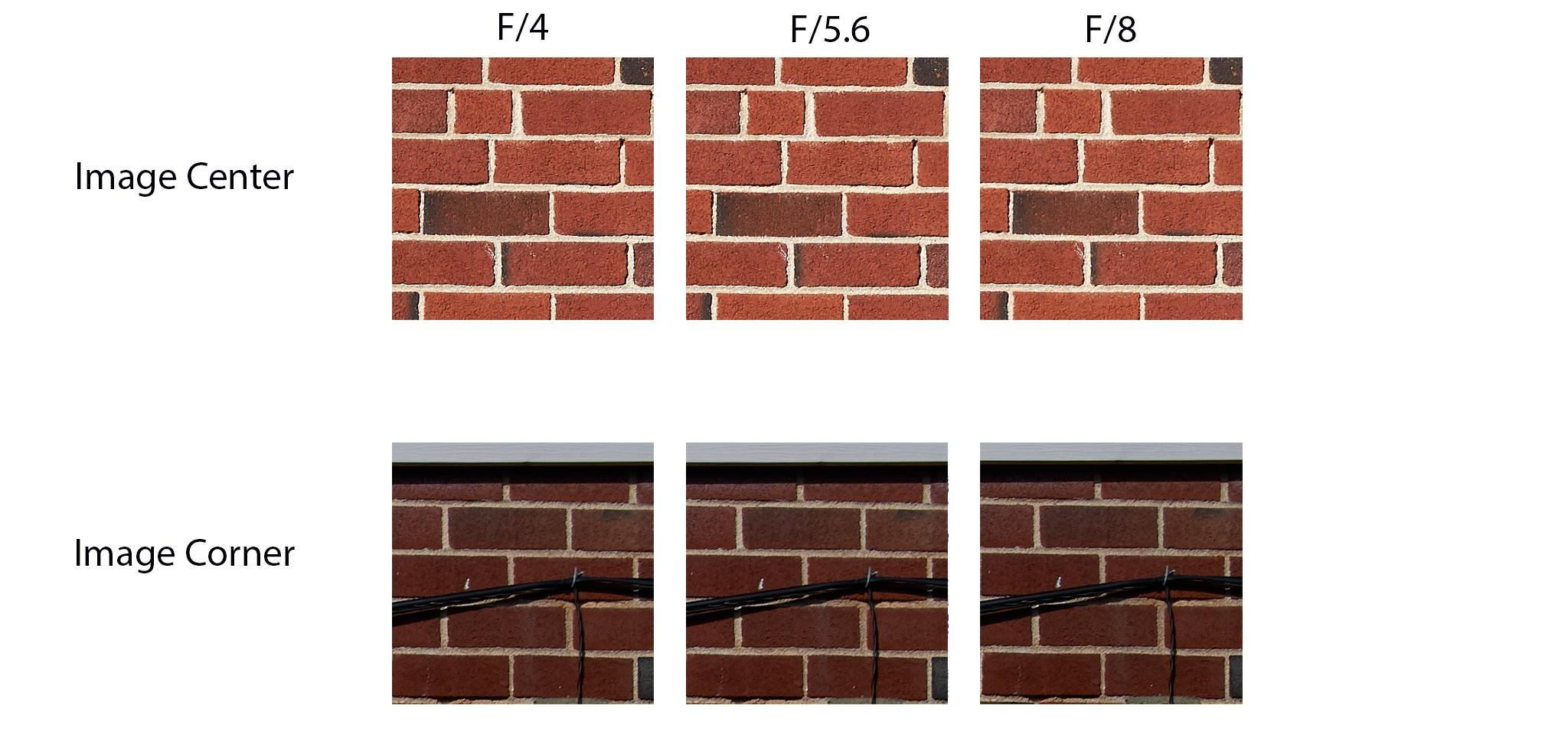
A lens may deliver excellent center sharpness but noticeably weaker performance near the edges.
This can affect:
Object detection
Facial recognition
Vehicle recognition
Scene understanding
Machine vision inspection
For example, a security camera watching a parking lot may have a vehicle entering near the edge of the image.
If the center looks fantastic but the edges are soft, the camera's impressive resolution specification does not tell the whole story.
For engineers, the more useful question is:
How evenly does the lens perform across the image?
Aberrations Quietly Steal Detail
Optical aberrations are another reason a high-megapixel camera may fail to deliver the expected image quality.
Common problems include:
Spherical aberration
Chromatic aberration
Coma
Astigmatism
Field curvature
You do not necessarily need to be an optical designer to understand the result.
The practical consequence is simple:
Details become less precise.
Edges may lose contrast. Fine structures may appear colored or smeared. Corners may become softer.
Modern optical design therefore involves much more than choosing a focal length and aperture.
The optical system has to balance multiple factors simultaneously.
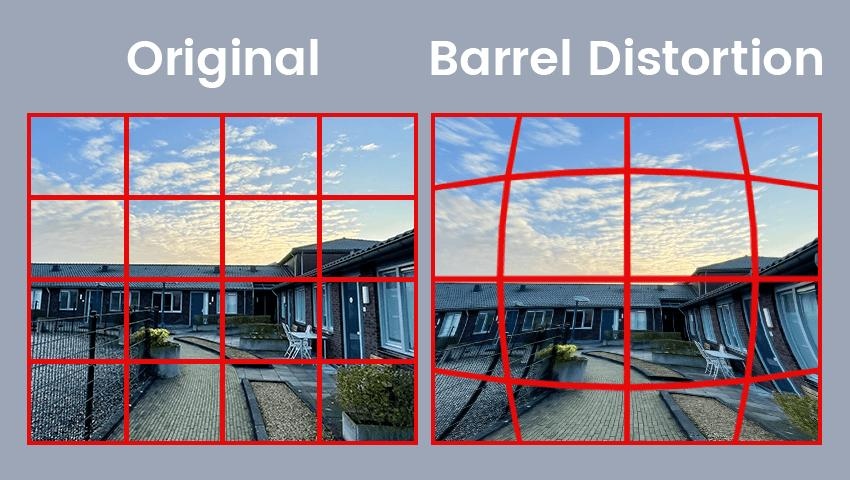
Distortion Is Also an Image-Quality Issue
Distortion is sometimes treated as a purely visual problem.
It isn't always.
For a casual photograph, curved straight lines may simply look unattractive.
For machine vision or AI applications, geometry can matter.
A wide-angle lens with significant distortion can make objects near the edge appear very different from their actual shape and position.
This does not mean every application needs ultra-low distortion.
A security camera may reasonably accept some distortion in exchange for a much wider field of view.
An industrial measurement system may not.
Again, optical engineering is about trade-offs.
The “best” lens depends on what the camera is supposed to do.
Why “8MP Lens” Is an Incomplete Description
This is perhaps the most important point.
The phrase “8MP lens” is useful for marketing, but technically incomplete.
Resolution is influenced by the relationship between:
Lens
Sensor
Pixel size
Aperture
Image circle
CRA
Image processing
Lighting conditions
A lens does not exist in isolation.
A particular lens may perform very well with one sensor and less effectively with another because the optical requirements have changed.
This is why experienced camera engineers usually ask for the sensor model and optical requirements before approving a lens.
A supplier who immediately says “Yes, this lens supports 8MP” without asking anything else may be answering the sales question rather than the engineering question.
So How Should Engineers Evaluate a High-Resolution Lens?
Instead of starting with megapixels, I recommend starting with the application.
Ask:
1. What sensor will be used?
Sensor format and pixel size establish the optical requirements.
2. What field of view is required?
A wide-angle design introduces different challenges from a narrow-angle lens.
3. What level of detail actually matters?
A security camera identifying a person from several meters away has different requirements from a machine vision camera inspecting a tiny component.
4. How important is edge performance?
For many wide-angle systems, this is critical.
5. What happens at the intended aperture?
A lens may perform differently when operated wide open compared with being stopped down.
6. What does the MTF data show?
This provides much more useful information than a megapixel label alone.
The Real Meaning of “High Resolution”
A high-resolution lens is not simply a lens with a high number printed beside it.
It is an optical system that can reproduce fine details with sufficient contrast, across the required image field, under the intended operating conditions.
That is a much harder engineering problem.
And honestly, that is why two lenses with apparently similar specifications can have very different prices.
You are not simply paying for more glass.
You are paying for optical design, tolerances, materials, manufacturing accuracy, coating, assembly, and testing.
At Boshi Optics, optical solutions are developed for applications ranging from security surveillance and automotive imaging to medical imaging, smart devices, and other camera systems. The company's product portfolio includes lenses with different sensor formats, resolutions, fields of view, apertures, and optical structures, reflecting the reality that there is no single “best” lens for every camera.
Final Thought: Stop Counting Pixels, Start Looking at Information
Megapixels are useful.
They tell you how many pixels a sensor can provide.
But they do not tell you how much useful information the optical system can deliver to those pixels.
That is why experienced engineers look beyond the number on the camera box.
They look at MTF.
They look at pixel size.
They look at center-to-edge performance.
They look at aberrations, distortion, illumination, and sensor compatibility.
Most importantly, they look at the actual image.
Because ultimately, customers do not buy 8 million pixels.
They buy the details those pixels are supposed to show.