

Can a Better Lens Make a Cheaper Sensor Perform Better
Here's a question we hear surprisingly often in camera development:
“If we use a better lens, can we get better performance from a cheaper sensor?”
The honest answer is:
Yes—but not in the way you might think.
A better lens cannot magically turn a 5MP sensor into an 8MP sensor. It cannot increase the sensor's physical pixel count, improve its native dynamic range, or eliminate noise that comes from the sensor itself.
But there is another side to the story.
A sensor can only record the optical information that reaches it.
If the lens delivers poor detail, low contrast, insufficient light, or badly controlled aberrations, even an expensive sensor is being asked to work with compromised information.
On the other hand, a well-designed lens can help a more affordable sensor extract much more of what it is actually capable of.
And that distinction is extremely important when designing a cost-sensitive camera.
The Sensor Isn't Working Alone
It is tempting to think of the sensor as the “engine” of the camera.
In reality, the imaging system is closer to a team.
The lens collects and organizes light.
The sensor converts that light into electrical signals.
The ISP processes those signals.
Software and AI then interpret the resulting image.
If one part of the chain is weak, the other components have to compensate.
And compensation has limits.
Imagine an affordable sensor that is perfectly capable of resolving a particular level of detail.
Now put a poor-quality lens in front of it.
The lens may blur that detail before it ever reaches the sensor.
The sensor cannot record information that was never delivered to it.
This is why buying the most expensive sensor while treating the lens as a commodity component can be a surprisingly inefficient strategy.
A Better Lens Doesn't Add Pixels. It Makes Pixels More Useful.
This is the key idea.
Suppose two cameras use exactly the same sensor.
Camera A uses a mediocre lens.
Camera B uses a better optical system.
The sensor specifications have not changed.
Both still have the same number of pixels.
But the images can look noticeably different.
Why?
Because pixel count is only part of the story.
The optical system influences:
Resolution
Contrast
Light transmission
Distortion
Chromatic aberration
Edge sharpness
Image uniformity
A better lens can therefore help the sensor make better use of the pixels it already has.
Think of it this way:
A warehouse full of empty boxes doesn't mean you have more products.
The sensor gives you the boxes.
The lens helps determine how much useful information gets put inside them.
MTF: Where the Lens Meets the Sensor
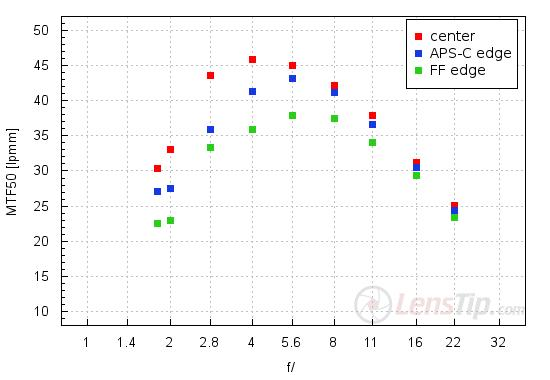
This is where MTF (Modulation Transfer Function) becomes useful.
MTF describes how effectively an optical system preserves contrast at different levels of detail.
You don't need to become an optical engineer to understand the practical meaning.
A lens with good MTF performance can preserve fine details with useful contrast.
A lens with poor MTF performance may turn those details into increasingly weak and blurry patterns.
This becomes particularly important with modern sensors, where pixel sizes can be very small.
A sensor may technically have plenty of pixels, but if the lens cannot resolve enough spatial detail, those pixels are not being used efficiently.
This is one reason a well-designed optical system can sometimes make a camera feel “sharper” even though the sensor itself has not changed.
The lens isn't upgrading the sensor.
It is simply getting less in the way.
More Light Can Also Change the Game
Resolution isn't the only issue.
Low-light performance is another area where lens quality matters.
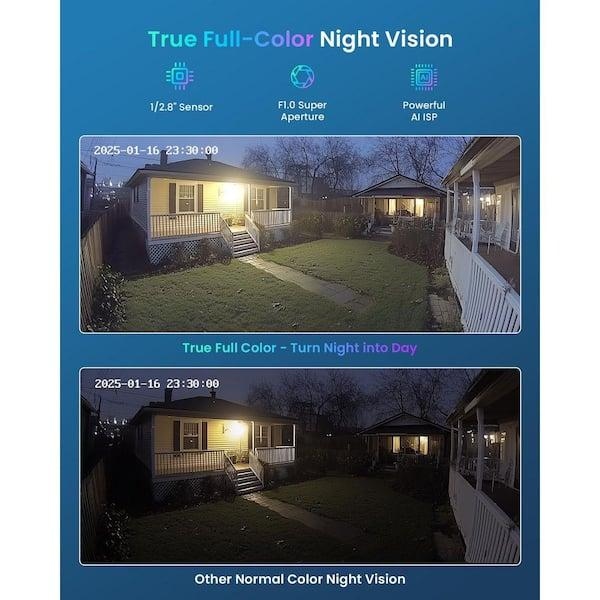
A larger aperture allows more light to reach the sensor.
For applications such as security surveillance, outdoor monitoring, robotics, or vehicle cameras, this can be particularly valuable.
Consider two cameras using the same sensor.
One uses a relatively small-aperture lens.
The other uses a larger-aperture lens with better light-gathering capability.
In a bright environment, the difference may not be dramatic.
At night, it can become much more obvious.
The second camera may be able to maintain a lower gain level, better exposure, and cleaner image information.
That does not mean the lens has improved the sensor's noise characteristics.
It means the lens has given the sensor a better optical signal to begin with.
And sometimes, that's half the battle.
Where a Better Lens Cannot Help
It's important not to oversell this.
A better lens has limits.
If the sensor has:
Poor dynamic range
High read noise
Low quantum efficiency
Limited color performance
Insufficient pixel count
the lens cannot completely solve those problems.
Likewise, a lens cannot turn a low-resolution sensor into a high-resolution sensor.
There is no optical equivalent of secretly upgrading the sensor firmware.
If someone promises that, be suspicious.
Good optical engineering is about maximizing system performance—not performing miracles.
The Real Opportunity Is System Matching
The most interesting question isn't:
“Which is better, the expensive sensor or the expensive lens?”
It is:
“How should the lens and sensor be matched?”
This is where experienced optical design becomes valuable.
A lens should be evaluated according to the actual sensor:
Sensor format
Pixel size
Active image area
CRA requirements
Required resolution
Field of view
Aperture
Image circle
For example, using an extremely high-resolution lens with a relatively low-resolution sensor may provide little practical benefit.
But using a poorly matched lens with a capable sensor can leave significant performance on the table.
The sweet spot is somewhere in between.
This Is Where Cost Optimization Gets Interesting
For camera manufacturers, this can have a major commercial impact.
Imagine a product needs to hit a specific image-quality target while staying within a strict BOM cost.
The obvious approach is often:
“Let's buy a better sensor.”
Sometimes that's the right answer.
But sometimes the better approach is to look at the entire imaging system.
Could a better optical design allow a more affordable sensor to achieve the required result?
Could a larger aperture improve low-light performance enough to reduce the need for aggressive image processing?
Could better edge performance improve AI detection without increasing sensor resolution?
Could better sensor-lens matching provide the required image quality without simply adding more megapixels?
These are much more interesting engineering questions.
And they can have a direct impact on product cost.
A Good Lens Can Be the Smarter Upgrade
This is why we at Boshi Optics often look at the camera as a complete optical system rather than evaluating the lens in isolation.
A security camera, drone, automotive camera, robot, industrial camera, or medical imaging device may have completely different priorities.
The best optical solution isn't necessarily the most expensive one.
It is the one that gives the sensor the right kind of information for the job.
At Boshi Optics, optical development and manufacturing cover applications including security surveillance, AI vision, drones, automotive imaging, medical devices, and other imaging systems. This application-driven approach helps engineers balance resolution, aperture, field of view, size, distortion, and other requirements rather than simply chasing the highest specification.
So, Can a Better Lens Make a Cheaper Sensor Perform Better?
Yes—but with an important qualification.
A better lens does not physically improve the sensor.
It does something more realistic:
It can help the sensor perform closer to its actual potential.
Good optics can deliver better detail, more useful light, stronger contrast, and more consistent image quality to the sensor.
For cost-sensitive camera development, that can be a very smart strategy.
Because sometimes the answer isn't:
“Buy a more expensive sensor.”
Sometimes it's:
“Stop making the sensor work with a mediocre lens.”
And that is a conversation worth having before the next camera project gets locked into a BOM.
Previous:Can Software Fix a Bad Camera Lens