

How a Protective Window Can Change Camera Image Quality
Introduction: The Lens Is Not Always the Last Optical Surface
A camera may need a front window to keep out dust, moisture, cleaning chemicals, or accidental contact. In outdoor surveillance, industrial inspection, vehicle systems, and equipment exposed to harsh environments, this protective surface can be essential.
But placing a piece of glass in front of a lens changes the optical system. Even a flat, transparent window can introduce reflections, reduce transmission, create ghost images, or affect focus if it is not accounted for in the design. The result may be a camera that passes a basic visual check but loses contrast under difficult lighting.
The solution is not to avoid protective windows. It is to specify and validate them as part of the complete imaging system.
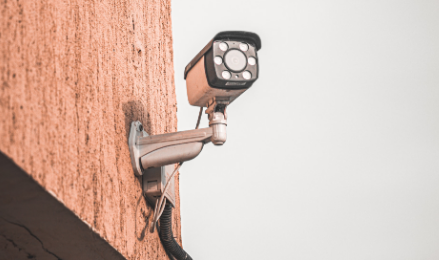
1. What Is a Camera Protective Window?
A protective window is a transparent component placed in front of the lens or camera module. Depending on the application, it may be glass, polymer, or a more specialized material. It can be flat or shaped, coated or uncoated, and integrated into a sealed housing.
The window has a mechanical role and an optical role. Mechanically, it helps protect internal components from the environment. Optically, it becomes another surface through which light must pass before reaching the lens and sensor.
That distinction matters because "clear to the eye" does not necessarily mean "optically neutral." The window's refractive index, thickness, parallelism, surface quality, coating, and distance from the lens can all affect performance.
2. Reflections Can Reduce Contrast
When light reaches an interface between materials with different refractive indices, a portion of it may be reflected. A window has at least two surfaces, so reflections can occur at both the outer and inner surfaces. Depending on the geometry, some reflected light may return toward the lens or sensor and form ghost images.
This becomes especially noticeable when the scene contains bright point sources, such as headlights, streetlights, or direct sunlight. The result may be veiling glare, a faint secondary image, or reduced contrast around high-brightness areas.
An anti-reflection (AR) coating can reduce surface reflections over a specified wavelength range and angle of incidence. However, coating performance depends on the actual optical band, angle, and environmental requirements. A coating designed for visible light should not automatically be assumed suitable for near-infrared or thermal infrared use.
When specifying a window, ask for the transmission or reflection requirements across the relevant wavelength band, not simply a statement that the surface is coated.
3. Flatness, Parallelism, and Wedge
A protective window may appear flat but still have optical tolerances that matter. Surface flatness describes how much a surface deviates from its intended shape. Parallelism describes the angular relationship between the two surfaces. A small wedge can steer the transmitted beam, while surface errors can introduce wavefront changes.
The significance depends on the camera's resolution, aperture, field of view, and working distance. A basic monitoring camera may tolerate a different level of error than a precision inspection system.
If the window is thick, highly tilted, or positioned close to a sensitive optical path, its influence may need to be included in optical design or system calibration. The right tolerances should be derived from the imaging requirement rather than copied from a generic drawing.
4. Thickness and Distance From the Lens
Adding a plane-parallel plate in a converging beam can shift focus and change optical path length. The practical effect depends on the lens design and the position of the window relative to the lens. If the window is placed after a lens has already been optimized, the final focus and image quality may differ from the original design.
The window-to-lens spacing also matters. A small gap may reduce the room available for contamination management or mechanical assembly. A larger gap can change reflection paths and may make internal surfaces more visible to the lens.
For a new camera design, the most robust approach is to provide the optical designer with the window material, thickness, wedge or parallelism tolerance, coating, tilt, and mounting distance early in the project. For an existing camera, compare performance with and without the window where possible, then validate the final assembly.
5. Material Choice: Glass or Polymer?
Material selection is a balance between optical, mechanical, environmental, and cost requirements.
Glass may offer good surface durability and dimensional stability for many applications, but its type, thickness, edge treatment, and coating still need to suit the environment. Polymer windows can reduce weight or support complex shapes, but may have different scratch resistance, thermal expansion, chemical resistance, and optical properties.
There is no universal best material. A window exposed to outdoor weather may have different requirements from one used inside a medical device or an industrial enclosure. Consider:
Spectral transmission across the camera's operating band
Surface hardness and abrasion resistance
Chemical compatibility with cleaning agents
Temperature range and thermal expansion
Moisture sealing and condensation risk
Impact requirements and mounting method
Long-term availability and cost
These are system-level decisions, not merely purchasing choices based on price per piece.
6. Dirt, Water, Condensation, and Surface Treatment
A protective window only works well if it stays optically usable. Dust, fingerprints, water droplets, oil, and condensation can scatter or redirect light. In outdoor applications, a droplet can act like a small lens and distort the scene. A dirty window may also reduce contrast long before the camera appears to have failed.
Surface treatments can help manage some contamination, but they should be selected for the intended environment and validated for durability. Hydrophobic or oleophobic treatments, for example, are not a substitute for appropriate sealing, drainage, cleaning access, or condensation control.
Mechanical design matters as much as the surface coating. Consider how water drains, whether the window is recessed, how it can be cleaned, and whether the enclosure can maintain the required temperature and humidity conditions.
7. Visible, Near-Infrared, and Thermal Cameras Need Different Windows
The term "transparent" is incomplete without specifying wavelength. A material that transmits visible light well may not transmit near-infrared or long-wave infrared energy in the way a thermal camera requires.
For visible and near-infrared cameras, common optical glasses may be suitable if their transmission and coatings match the system. Thermal imaging systems often require specialized infrared-transmitting materials and must be evaluated over the detector's spectral band. An ordinary glass cover can block much of the long-wave infrared radiation used by many thermal cameras.
Do not choose a window based only on visual appearance. Specify the operating wavelength range, incidence angles, temperature conditions, and required transmission. If the camera combines multiple spectral channels, each channel may impose different requirements.
8. A Practical Specification Checklist
Before approving a protective window, confirm the following:
Spectral band: visible, near-infrared, short-wave infrared, or long-wave infrared
Transmission and reflection: target values over the required wavelengths and angles
Material and thickness: including environmental compatibility
Surface quality: scratches, digs, flatness, and parallelism as appropriate
Coating: AR, protective, hydrophobic, or other treatments with defined conditions
Mechanical integration: tilt, spacing, seal, retention, and available aperture
Environmental exposure: temperature, moisture, dust, chemicals, abrasion, and impact
Acceptance test: image contrast, flare, focus, and transmission in the final assembly
For demanding applications, include the actual window in the camera's optical evaluation rather than qualifying the lens and window independently and assuming the combination will behave identically.
How Boshi Optics Can Support Optical Integration
Boshi Optics provides optical products and customized optical support for imaging applications across security, automotive electronics, medical devices, and other fields. For projects involving a cover window, unusual package constraints, or a non-standard spectral band, review the customized optical products page and share the relevant system requirements.
Useful starting information includes the sensor or detector, operating wavelength, field of view, lens-to-window distance, window thickness and material, operating temperature, and target image quality. Early coordination can help identify whether the window should be included in optical design, assembly validation, or both.
Conclusion: Treat the Window as Part of the Camera
A protective window is not merely a mechanical accessory placed in front of an otherwise finished camera. It is part of the optical path and can influence transmission, reflections, focus, contrast, and environmental reliability.
Choose its material and coating for the actual wavelength and environment. Define the mechanical tolerances, include the window in optical evaluation, and test the final assembly under realistic lighting conditions.
When a camera's image quality matters, every optical surface deserves attention—including the one added to protect the lens.