

Lens Resolution Explained: From Megapixels to Real Optical Performance
1. Sensor Resolution and Lens Resolution Are Different Things
Let’s start with the basic misunderstanding:
8MP Sensor ≠ 8MP Lens
A sensor determines how many pixels are available to record information.
For example:
An 8MP sensor may contain:
3840 × 2160 pixels
Millions of photosensitive units
The ability to store high-resolution image data
However, the lens determines whether the incoming optical information contains enough detail for those pixels.
Think of it this way:
A sensor is like a high-resolution screen.
The lens is like the source image being displayed.
A 4K monitor cannot show true 4K quality if the original content is only 720p.
The same principle applies to cameras.
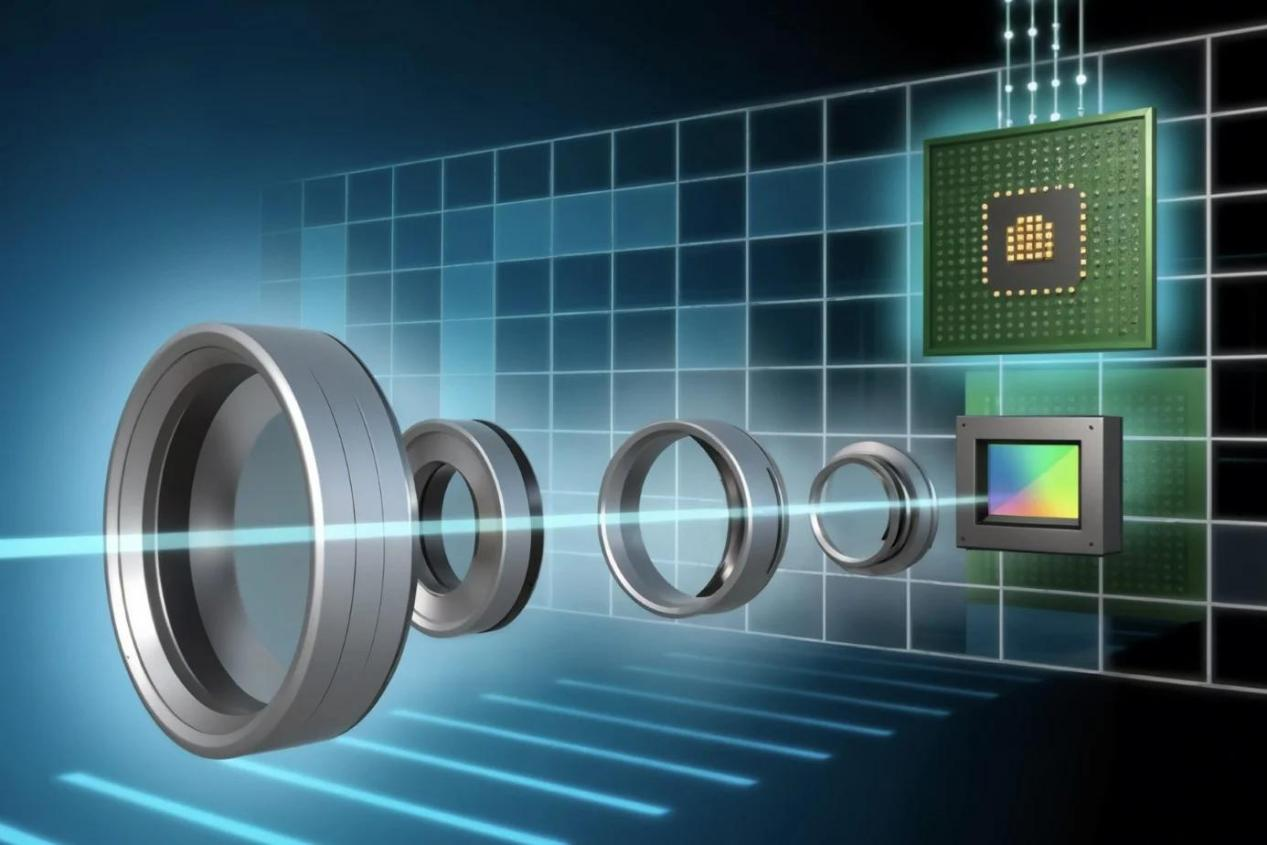
2. Why More Megapixels Do Not Always Mean Better Images
Many customers believe:
10MP > 8MP > 5MP
Therefore:
More pixels = better image.
This is only partially true.
Higher resolution sensors require:
Better optical resolution
Higher-quality glass
More precise lens manufacturing
Better optical alignment
Otherwise, increasing megapixels can reveal more problems:
Soft images
Poor edge sharpness
Chromatic aberration
Reduced contrast
In some cases, a well-designed 5MP optical system can outperform a poorly matched 8MP system.
3. The Lens Is the Limiting Factor in Many High-Resolution Systems
In optical engineering, we often describe the lens as the “gatekeeper” of information.
Why?
Because before the sensor receives an image, the lens has already decided:
Which details are preserved
Which details are lost
How much contrast remains
How accurately edges are reproduced
Once optical information is lost, software cannot fully recover it.
AI algorithms can enhance images.
Image processing can reduce noise.
But no algorithm can perfectly recreate details that were never captured.
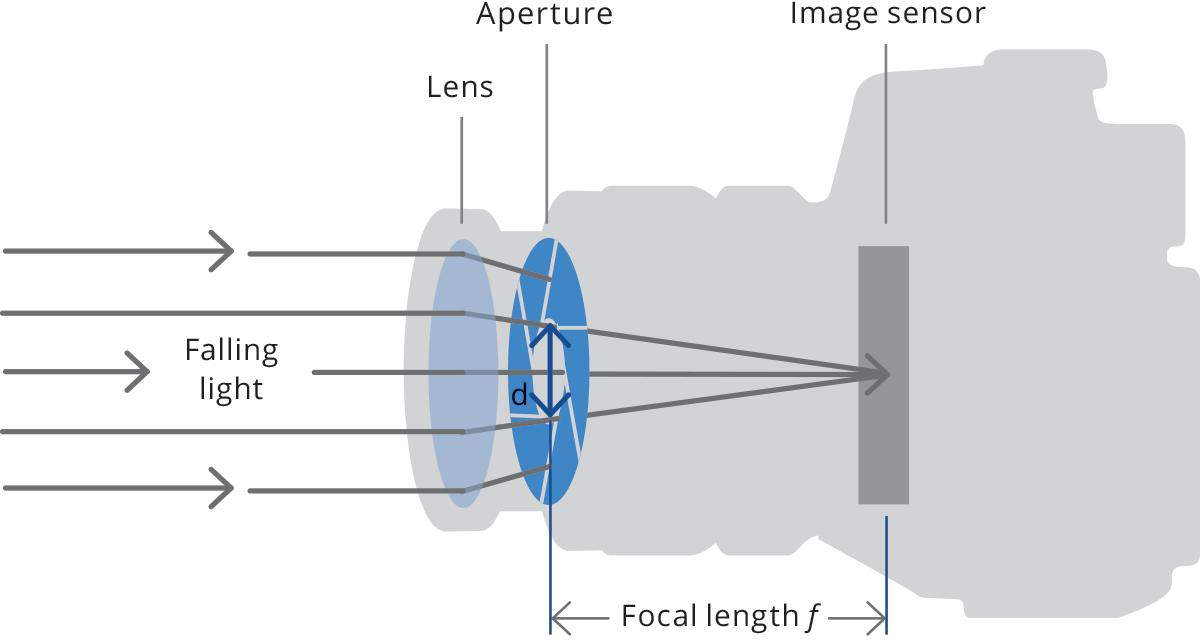
4. Understanding MTF: The Real Measurement of Lens Resolution
When engineers evaluate lens performance, they do not simply look at megapixel labels.
They look at optical parameters such as:
MTF (Modulation Transfer Function)
MTF describes how effectively a lens transfers contrast and detail from the real world to the image sensor.
Simply explained:
Higher MTF = Better detail reproduction
A lens with strong MTF performance can reproduce:
Fine textures
Small objects
Sharp edges
High-frequency details
Why MTF Matters More Than “MP Rating”
Two lenses may both be advertised as:
“8MP compatible”
But their actual performance can be completely different.
One lens may provide:
Sharp center image
Good edge performance
Stable contrast
Another may show:
Soft corners
Reduced detail
Poor contrast
The difference appears immediately in real applications.
5. Center Sharpness Is Not Enough
A common mistake during lens evaluation is only checking the center area.
But real applications require the entire image.
For example:
Security Surveillance
A wide-angle camera may need to identify:
Vehicles at the edge
People entering from corners
License plates away from the center
Machine Vision
Industrial systems may analyze:
Objects across the whole field
Measurement points
Defect locations
Robotics
AI systems require:
Stable environmental information
Accurate object boundaries
A lens that is sharp only in the center is not necessarily a high-performance lens.
6. Sensor and Lens Matching: The Forgotten Engineering Step
A high-resolution sensor requires careful optical matching.
Engineers need to consider:
Sensor Size
Examples:
1/2.7"
1/1.8"
1/1.2"
A lens designed for a smaller sensor may cause:
Vignetting
Dark corners
Reduced image utilization
Pixel Size
Modern sensors often use smaller pixels.
Smaller pixels require better optical resolution.
If the lens cannot resolve the required spatial frequency, the extra pixels provide little value.
CRA Compatibility
Chief Ray Angle (CRA) matching is also important.
Poor matching can lead to:
Color shading
Reduced brightness
Image degradation
7. Why Optical Quality Becomes More Important as AI Develops
There is another reason lens resolution matters today:
Artificial intelligence.
Modern AI systems rely heavily on image quality.
Applications include:
Face recognition
Vehicle identification
Robot vision
Industrial inspection
Smart transportation
AI does not understand “intent.”
It analyzes patterns from pixels.
Poor optical resolution creates:
Missing features
Incorrect classification
Lower confidence scores
A better lens provides better data.
Better data creates better AI decisions.
8. The Common Customer Question: “Can This Lens Support 8MP?”
This is one of the questions optical engineers hear frequently.
But the answer is more complicated than “yes” or “no.”
A professional evaluation should consider:
Sensor model
Pixel size
Application distance
Field of view
Lighting environment
Required image quality
A lens should not only “support” a sensor.
It should be optimized for the entire imaging system.
9. Choosing the Right Lens: Resolution Is Only One Piece of the Puzzle
A high-performance lens requires a balance between multiple factors:
Resolution
Can it reproduce sufficient detail?
Aperture
Can it collect enough light?
Distortion
Does it maintain accurate geometry?
Field of View
Does it cover the required area?
Reliability
Can it maintain performance over time?
The best lens is not always the one with the highest number on the specification sheet.
It is the one that creates the best final image in real conditions.
Conclusion: Real Resolution Comes From the Complete Optical System
The imaging industry is moving toward higher resolution sensors, smarter AI algorithms, and more demanding applications.
But one principle remains unchanged:
Pixels alone do not create image quality.
A high-resolution sensor needs a high-performance lens.
An 8MP sensor paired with a poor lens is still a limited imaging system.
The true resolution of a camera is determined by the cooperation between:
Optical design
Lens manufacturing precision
Sensor performance
Image processing technology
Final Insight
A sensor tells you how many pixels you have.
A lens determines how much information reaches those pixels.
In professional imaging systems:
The sensor captures the image.
The lens creates the detail.
That is why real optical performance matters more than megapixel numbers alone.