
How to Choose a Reliable Optical Lens Manufacturer in China
China has one of the world’s most complete optical manufacturing supply chains. Buyers can find thousands of suppliers offering CCTV lenses, automotive camera lenses, drone lenses, endoscope lenses, machine vision lenses, and customized optical components.
The difficulty is not finding a supplier.The difficulty is finding a manufacturer that can consistently deliver the image quality promised during the sample stage.
Camera lenses may look simple from the outside, but optical performance depends on design, materials, molding accuracy, coating, assembly, focusing, and inspection. Two lenses with the same focal length, aperture, and mount can produce completely different results.
A reliable optical lens manufacturer should therefore be evaluated by more than price, delivery time, or the number of products shown in a catalog.
1. Confirm Whether the Supplier Is a Real Manufacturer
The first step is to understand what the supplier actually produces in-house.
Some companies focus mainly on trading and purchase completed lenses from other factories. This may be acceptable for standard products, but it can become a problem when a project requires technical modification, failure analysis, or stable mass production.
A capable optical lens manufacturer should control or closely manage key processes such as:
Optical design
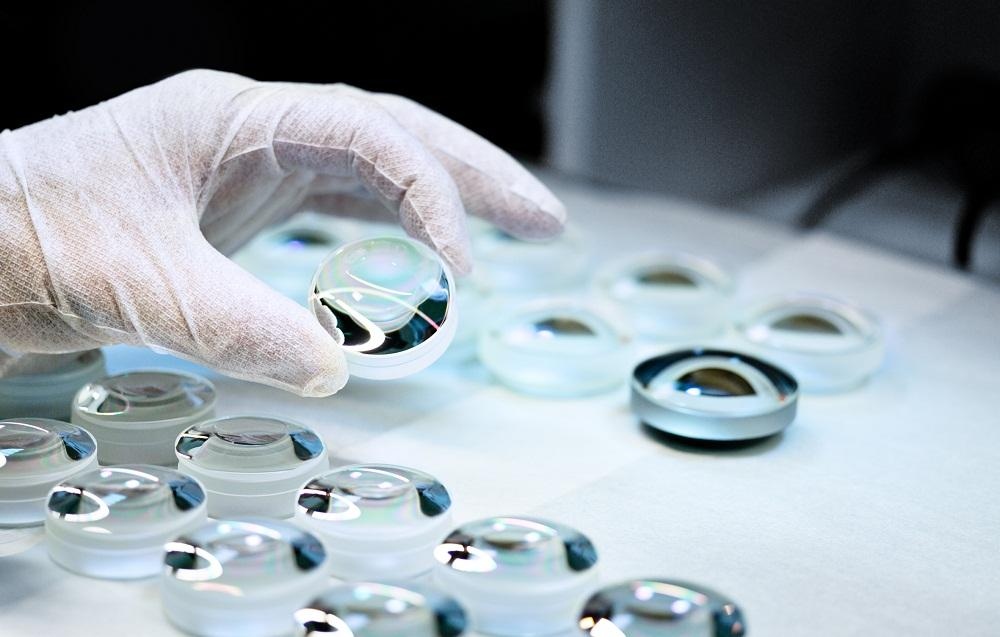
Glass lens processing
Plastic lens injection molding
Precision mold manufacturing
Optical coating
Lens barrel production
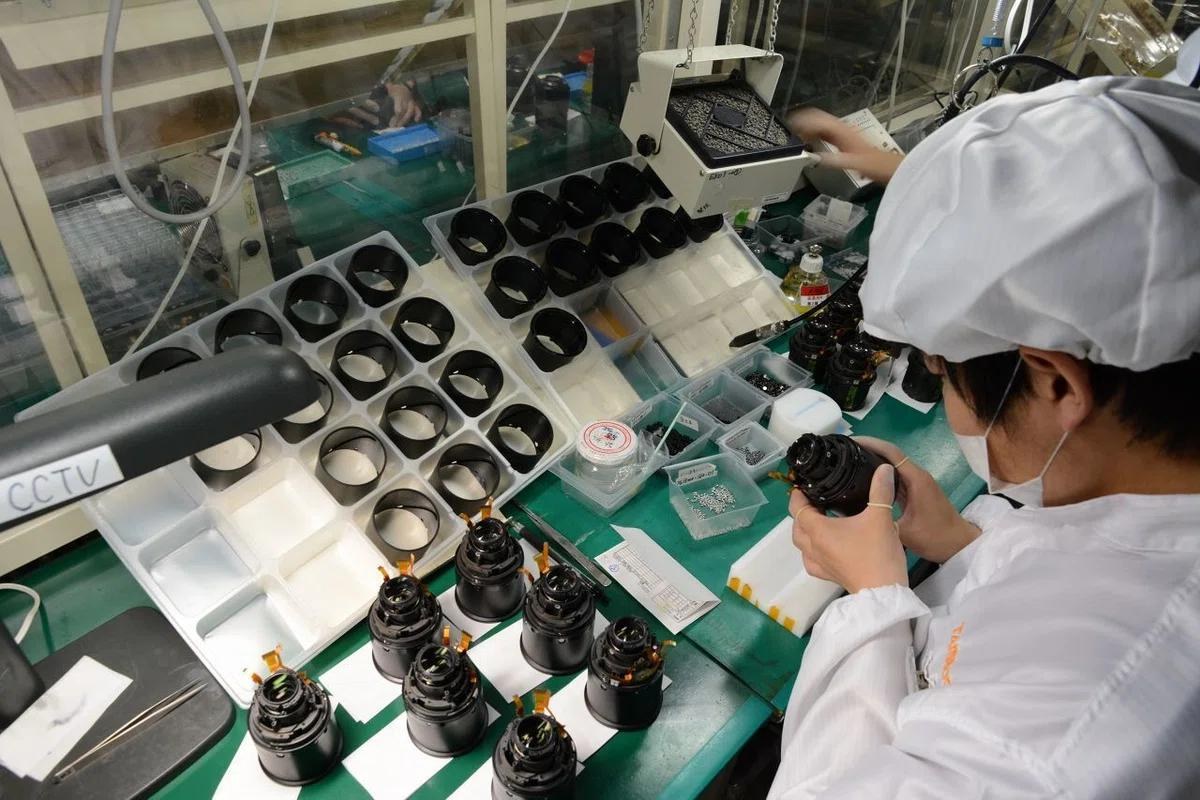
Lens assembly
Focusing and adhesive curing
MTF testing
Final inspection
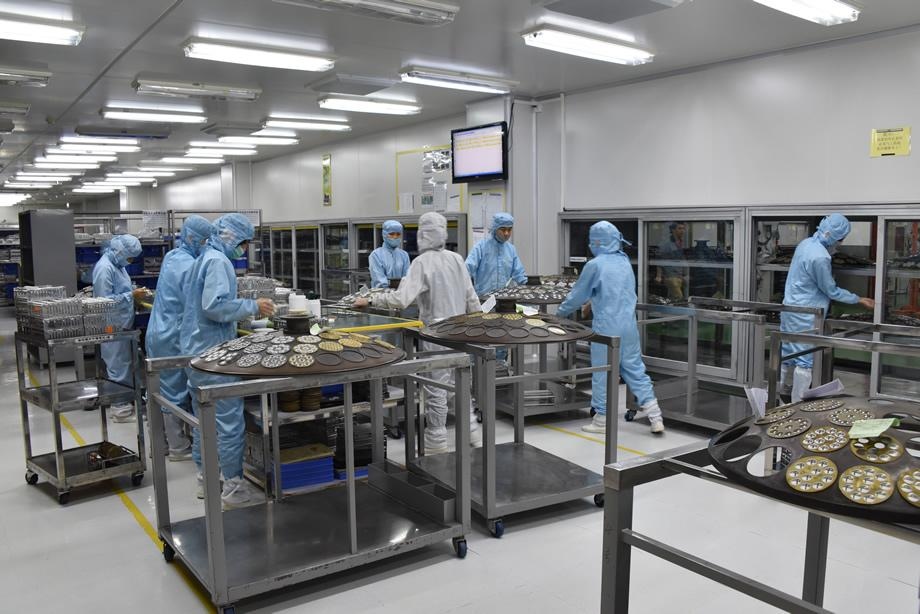
The advantage of an integrated manufacturer is not simply lower cost. The greater advantage is faster problem-solving.
When an image shows soft corners, color shading, focus variation, or poor low-light contrast, the cause may come from the optical design, element centering, barrel tolerance, filter thickness, assembly pressure, or sensor matching.
A manufacturer with engineering and production control can investigate the cause. A reseller can usually only forward the complaint.
2. Evaluate Engineering Capability, Not Catalog Size
A large product catalog does not automatically mean strong optical engineering.
A more useful test is to provide the supplier with your actual project requirements and observe the questions they ask.
A professional optical lens manufacturer should confirm information such as:
Sensor model and sensor format
Pixel size and target resolution
Required field of view
Working distance
Available installation space
Lighting environment
Day and night imaging requirements
Distortion limits
CRA requirements
Operating temperature
Waterproof or environmental requirements
Be cautious if a supplier recommends a lens after hearing only the focal length.
A 2.8mm or 4mm lens is not suitable for every camera using the same sensor size. Sensor resolution, image circle, CRA, cover glass, IR-cut filter, module structure, and application distance can all affect the final result.
The best suppliers do not simply sell existing lens models. They help customers translate application requirements into optical specifications.
3. Ask How Lens Performance Is Tested
Terms such as “high resolution,” “low distortion,” and “good night vision” are easy to print on a product page.
Testing data is more meaningful.
Depending on the application, a reliable lens manufacturer should be able to perform or provide:
MTF testing
Resolution testing
Field-of-view measurement
Distortion measurement
Relative illumination testing
CRA evaluation
Eccentricity inspection
Dimensional measurement
Temperature cycling
Waterproof testing
Day-and-night focus testing
MTF is particularly important because megapixel labels do not tell the complete story.
Two lenses may both be described as suitable for 5MP cameras, but one may maintain good contrast across the image while the other becomes noticeably soft near the edges.
Buyers should also ask whether optical testing is performed only on development samples or during mass production.
Producing one excellent sample is relatively easy. Producing thousands of lenses with consistent performance is the real challenge.
4. Pay Attention to Sample-to-Production Consistency
Many camera projects encounter the same problem:
The samples look good, but mass-production units show inconsistent focus or edge sharpness.
Lens performance can change because of very small variations in:
Lens spacing
Element centering
Barrel dimensions
Adhesive volume
Assembly force
Focusing position
Filter installation
Sensor alignment
A reliable manufacturer should have clear process controls for these variables.
Useful questions include:
Is focusing performed manually or automatically?
Is MTF sorting used?
How are golden samples managed?
Can production batches be traced?
How are defective units analyzed?
How are engineering changes recorded?
The cheapest unit price can quickly become expensive when inconsistent lenses create rework, delayed shipments, customer complaints, or field returns.
In optics, consistency is part of the product.
5. Choose a Manufacturer with Relevant Application Experience
Different imaging applications require different optical priorities.
A security camera lens may focus on:
Low-light sensitivity
Wide scene coverage
Day-and-night focus stability
Long operating life
Human and vehicle recognition
A dash camera lens may require:
Wide dynamic imaging
Temperature resistance
Compact structure
Stable performance under vibration
A drone lens may prioritize:
Lightweight construction
Wide field of view
Motion clarity
Compact TTL
A medical endoscope lens may need:
Extremely small dimensions
Short working distance
Controlled depth of field
Color accuracy
Waterproof performance
Manufacturers with experience across multiple industries are often better at understanding system-level trade-offs.
Boshi Optics develops optical solutions for security surveillance, automotive imaging, smart devices, drones, medical imaging, robotics, and other visual systems. This range of experience helps the company evaluate a lens according to the final application rather than treating every request as a simple focal-length selection.
6. Do Not Judge Low-Light Lenses by the F-Number Alone
Low-light performance has become increasingly important in security cameras, smart transportation, robotics, and AI vision systems.
A smaller F-number generally means a larger aperture and more light entering the lens. However, aperture alone does not guarantee good image quality.
Large-aperture optical systems must also control:
Spherical aberration
Coma
Chromatic aberration
Edge sharpness
Relative illumination
Ghosting
Focus consistency
An F1.0 lens may look impressive on a specification sheet, but the real challenge is maintaining usable resolution and stable production performance at such a large aperture.
This is why buyers developing full-color night vision cameras should ask for actual imaging results, MTF data, and low-light comparisons rather than relying only on the aperture value.
7. Understand the Difference Between Infrared and Black-Light Imaging
Traditional infrared security cameras use IR LEDs to illuminate a dark scene. This solution remains useful in environments with little or no visible light, but the night image is usually monochrome.
Black-light security camera lenses follow a different approach.
A large-aperture black-light lens collects more available visible light, helping the camera preserve color information in dim environments. This can be valuable for:
Clothing identification
Vehicle color recognition
Parking lot monitoring
Residential surveillance
Street security
AI object classification
Boshi Optics offers a compact M12 security lens solution with a 4mm focal length, an F1.0 aperture, compatibility with 1/2.7-inch sensors, and support for 2–5MP imaging systems.
The lens is designed for full-color low-light surveillance applications where available light must be used more efficiently.
However, a reliable manufacturer should also explain the limitation clearly: a passive lens cannot produce true color images in absolute darkness without an external light source.
For completely dark environments, infrared or supplementary white lighting may still be required.
Honest technical communication is one of the clearest signs of a trustworthy supplier.
8. Check Customization Capability
Standard products are useful for initial testing, but many camera projects eventually require adjustments.
Common customization requirements include:
Focal-length modification
FOV optimization
Distortion adjustment
Aperture changes
Different IR-cut filters
850nm or 940nm day-and-night optimization
Barrel or thread modification
Waterproof front-end design
Cover-glass integration
CRA matching
Temperature compensation
Before choosing an optical lens manufacturer in China, buyers should confirm whether technical discussions can involve optical engineers directly.
A professional supplier may not immediately promise that every requirement is possible. Sometimes the correct answer is that the lens must first be tested with the customer’s sensor and camera module.
That answer may sound less convenient, but it often prevents expensive mistakes.
9. Review Quality Systems and Production Equipment
Certifications do not guarantee perfect products, but they indicate whether a manufacturer has established structured processes.
Depending on the project, buyers may review:
ISO 9001
ISO 14001
ISO 45001
IATF 16949
Incoming material inspection
Process inspection
Final inspection standards
Batch traceability
Corrective action procedures
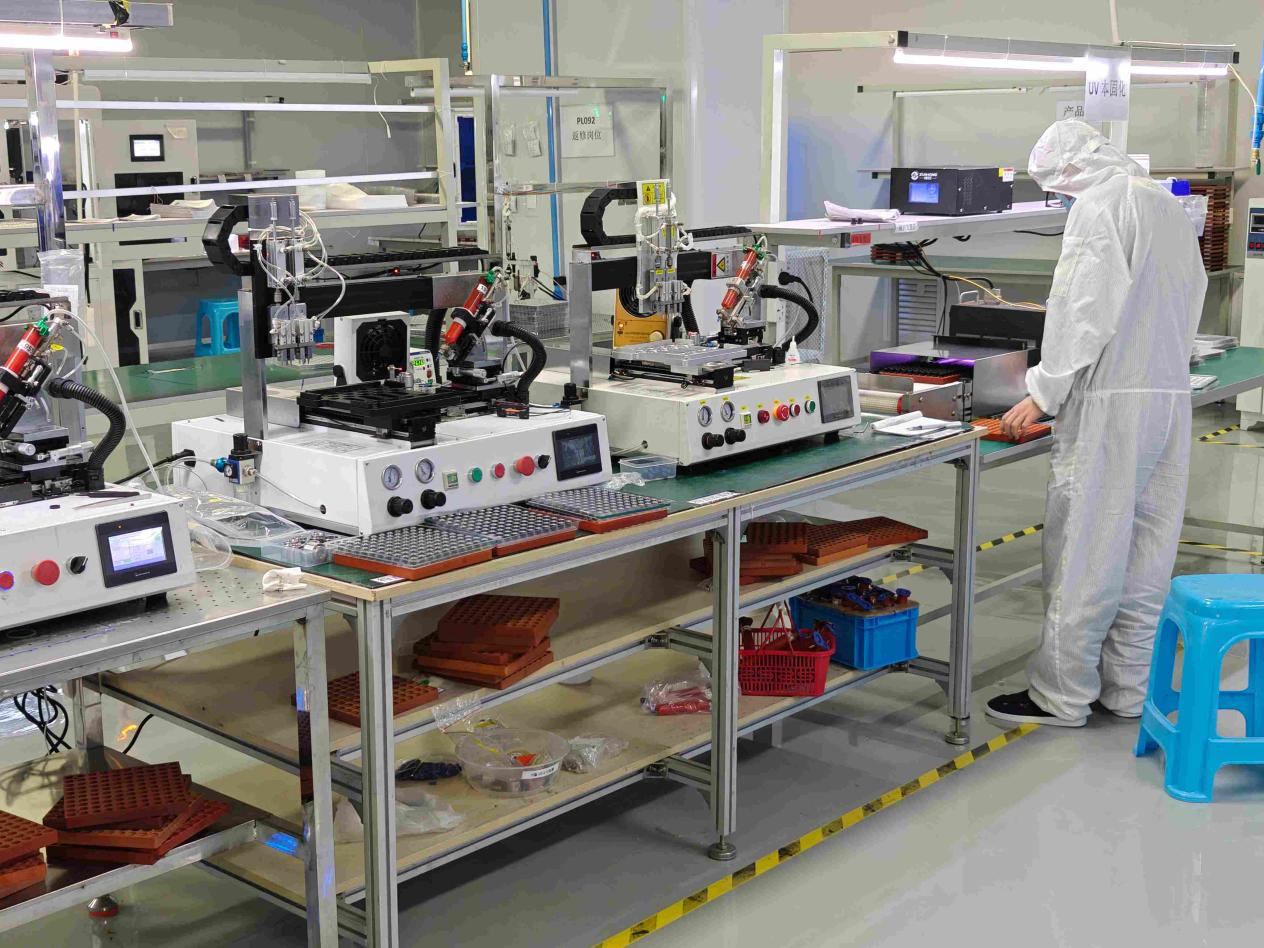
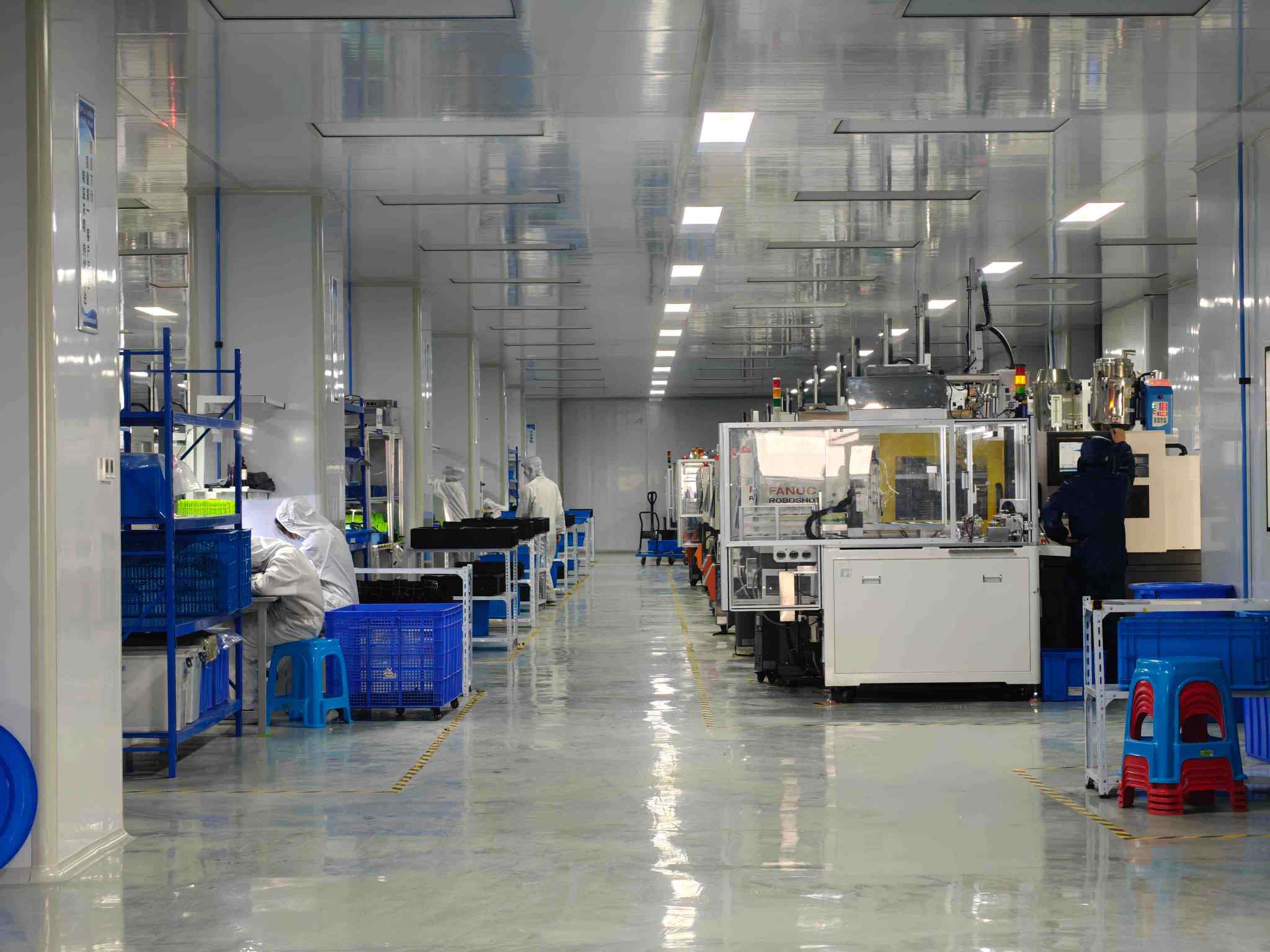
Boshi Optics operates an integrated manufacturing chain covering optical processing, precision molding, injection molding, coating, lens assembly, and quality inspection.
The company also uses equipment for automated assembly, MTF sorting, dimensional measurement, eccentricity inspection, and environmental reliability testing.
The value of this equipment is not the appearance of the factory. Its purpose is to reduce variation between samples and mass production.
10. Compare Total Project Cost, Not Only Unit Price
Price is important, especially in high-volume camera projects.
But the lowest quotation is not always the lowest-cost solution.
The total cost of a lens includes:
Unit price
Development time
Camera tuning time
Assembly yield
Rework
Delivery stability
Failure analysis
Customer returns
Product reputation
Saving a small amount on each lens may not be worthwhile if the camera requires repeated focusing or produces unstable night images.
The best optical lens manufacturer is usually not the cheapest supplier.
It is the supplier that reduces technical and production uncertainty.
Why Buyers Work with Boshi Optics
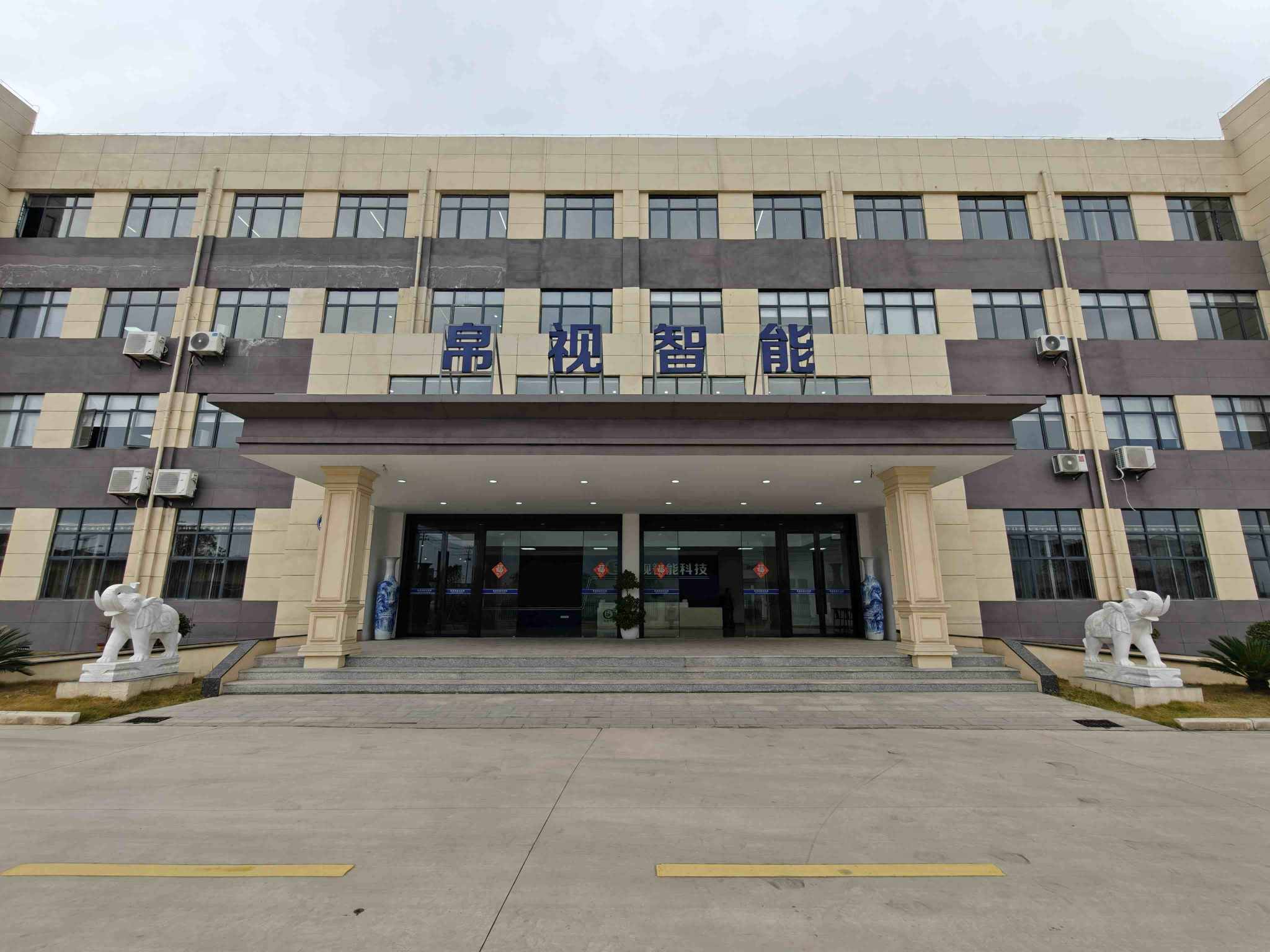
Boshi Optics combines optical engineering, manufacturing, assembly, testing, and customization capabilities for a wide range of camera applications.
The company supports customers with:
Standard and customized camera lenses
Sensor and lens matching
Optical and mechanical optimization
Sample evaluation
Low-light imaging solutions
Mass-production quality control
OEM and ODM services
For security camera projects, Boshi Optics can provide conventional surveillance lenses, wide-angle lenses, starlight lenses, infrared solutions, and large-aperture black-light lenses for full-color night imaging.
The objective is not to promote one lens for every application.
The objective is to select or develop the optical solution that best fits the sensor, lighting conditions, installation structure, and image requirements.
Conclusion
Choosing a reliable optical lens manufacturer in China requires more than comparing prices and product lists.
Buyers should evaluate:
Real manufacturing capability
Optical engineering support
Testing methods
Production consistency
Application experience
Customization capability
Quality systems
Technical honesty
A dependable lens manufacturer should understand not only how to produce a lens, but also how that lens affects the complete camera system.
Boshi Optics supports customers from initial optical selection through sample testing and mass production, providing camera lens solutions for security, automotive, medical, drone, robotics, and other imaging applications.
The right supplier does more than deliver optical components.
A reliable supplier helps control the final image.