

The Rise of AI-ISP: Will Algorithms Kill Traditional Optical Lenses, or Spark a Second Spring?
The Myth of "We'll Fix It In Post"
To understand why algorithms can't replace glass, you have to understand what AI-ISP actually does.
Traditional ISPs follow a strict set of mathematical rules to turn electrical signals into an image. AI-ISP uses neural networks trained on millions of images to "guess" what an image should look like. It is incredibly good at reducing digital noise in low light or boosting contrast.
But here is the fundamental law of physics that no algorithm can bypass: You cannot calculate data that was never captured.
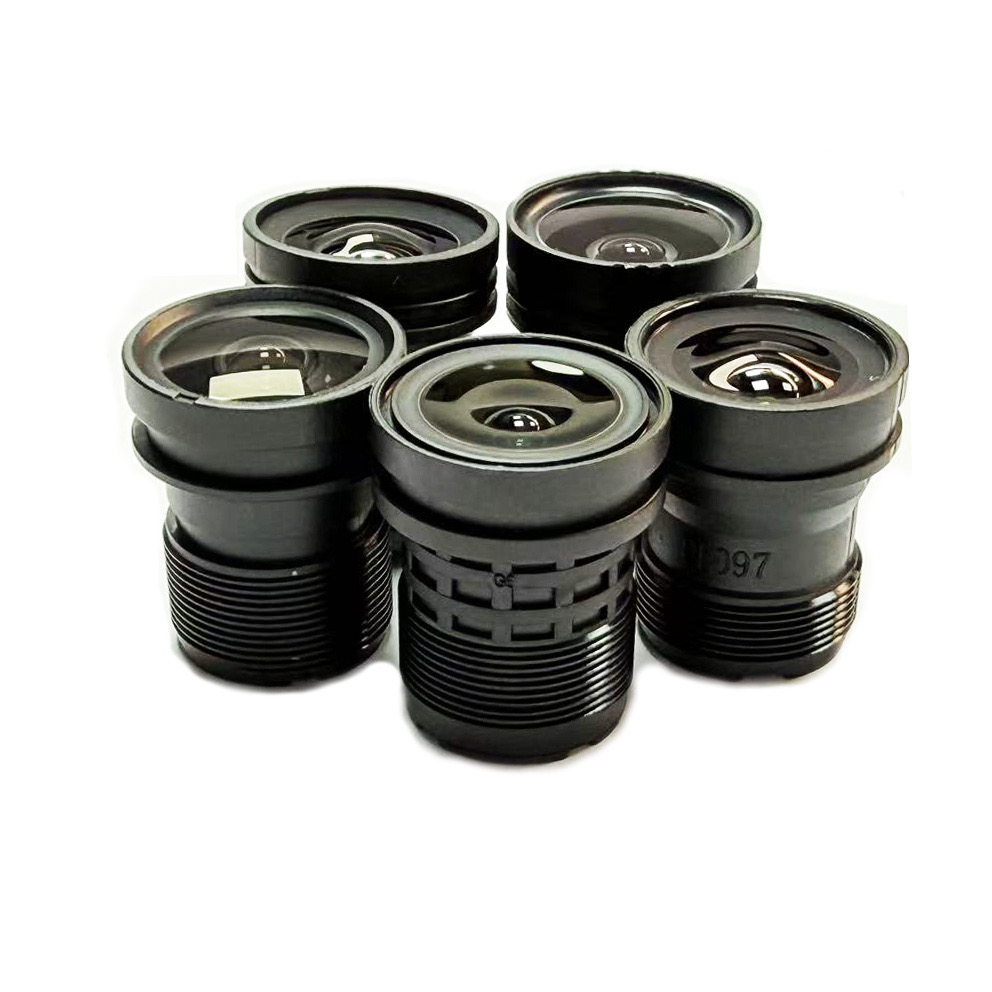
If you put a cheap, poorly designed lens in front of an expensive sensor, you bottleneck the physical light. If a license plate is completely blurred due to poor edge resolution, or if a person's face is obscured by severe lens flare, the AI-ISP has zero real data to work with. It is forced to guess.
In consumer smartphone photography, AI guessing is fine. If your iPhone AI makes the moon look a little too perfect, nobody gets hurt. But in our industries—security, autonomous robotics (AGV/AMR), and medical endoscopes—an AI "hallucination" is a disaster. You cannot have a security camera "guessing" a license plate number, and you absolutely cannot have a medical endoscope "guessing" the shape of a tissue mass.
Garbage In, Garbage Out: Why AI Hates Bad Optics
Instead of saving bad lenses, AI-ISP actually exposes their flaws. Machine vision algorithms are highly sensitive to specific optical errors that the human eye might naturally ignore.
Here is what happens when you feed an AI-ISP with data from a low-quality lens:
-
Chromatic Aberration (Purple Fringing): Cheap lenses bend different colors of light at different speeds, creating a purple or green halo around high-contrast objects. To a human, it's just an ugly picture. To an AI trying to calculate the exact edge of a robotic payload, that purple halo ruins the dimensional data.
-
Thermal Drift: If a cheap plastic lens sits in the summer sun, it expands. The focal point shifts by a few micrometers. The image goes soft. The AI-ISP suddenly drops its recognition rate from 99% to 60% because it can no longer find sharp edges.
-
Uneven Brightness: If the lens suffers from severe vignetting (dark corners), the AI works overtime trying to artificially brighten those edges, which introduces massive amounts of digital noise that ruins the machine vision analysis.
The Second Spring: Designing "AI-Native" Optics
This is exactly why the demand for precision optics is actually exploding. The companies building the best AI systems have realized that the only way to maximize their expensive software is to feed it the purest, most accurate physical light data possible.
We have moved past making lenses that just look good to the human eye. At Shanghai Silk Optical Technology Co., Ltd., we are now engineering AI-Native Optics. This requires a completely different manufacturing mindset:
-
Zero-Distortion Data Funnels: For AGV and AMR robots utilizing V-SLAM, we design custom multi-element lenses with ultra-low TV distortion (< 1%). We flatten the optical data physically so the AI doesn't waste computing power trying to un-warp the image.
-
Precision CRA Matching: As we've highlighted with our 5MP products, keeping the Chief Ray Angle (CRA) tightly controlled ensures there is no pixel crosstalk. The AI gets perfect, distinct red, green, and blue data without color bleeding.
-
Rock-Solid Stability: We utilize 7E all-glass structures or optimized 1G3P/2G2P hybrids because AI requires consistency. The hardware must hold its focal plane perfectly whether the camera is in a freezing warehouse or a baking parking lot.
The Bottom Line for Hardware Procurement
Don't let the AI hype convince you to downgrade your BOM (Bill of Materials). AI-ISP is a powerful engine, but optical glass is the fuel. If you put dirty fuel in a sports car, it will stall.
The companies that will dominate the 2026 market won't be the ones using AI to cover up cheap hardware. They will be the ones pairing cutting-edge AI-ISP with flawless, custom-engineered optics to achieve recognition rates that were previously impossible.
(Are you upgrading your systems to utilize AI-ISP? Make sure your hardware isn't the bottleneck. Reach out to the Shanghai Silk Optical engineering team today to source lenses built specifically for the algorithmic age.)