
How Starlight Lens Enhances Optical Imaging Performance?
Article Abstract
Starlight lenses are engineered to significantly improve low-light imaging performance, reduce optical noise, and enhance clarity in demanding visual environments. This article explores how Starlight Lens technology works, its core optical principles, real-world applications, and how it solves common imaging challenges faced by industrial, scientific, and consumer users. It also provides a structured breakdown of features, comparisons, and selection guidance to help readers make informed decisions.
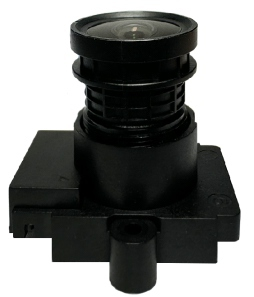
Table of Contents
Content Outline
- Introduction to Starlight Lens systems and optical behavior
- Common low-light imaging limitations
- Technical improvements introduced by Starlight Lens design
- Comparative performance analysis
- Use cases across industries
- Buyer guidance and selection criteria
Understanding Starlight Lens Technology
A Starlight Lens is designed to optimize image capture in extremely low-light environments. Unlike conventional optical systems that struggle with noise and loss of detail in darkness, Starlight Lens architecture focuses on maximizing light transmittance and minimizing signal degradation.
At its core, the system integrates high-transmittance glass materials, advanced anti-reflective coatings, and precision-aligned optical elements. These features collectively improve photon capture efficiency, enabling clearer imaging even under starlight-level illumination conditions.
Key Imaging Problems It Solves
- Low-light noise distortion: Reduces graininess in night imaging.
- Motion blur: Improves clarity in dynamic environments.
- Light scattering: Minimizes internal reflection artifacts.
- Color degradation: Preserves accurate color reproduction in dim environments.
Core Features and Advantages
Starlight Lens systems are built with a combination of optical engineering advancements that directly enhance image quality.
- High aperture light-gathering capability
- Multi-layer nano anti-reflective coating
- Enhanced signal-to-noise ratio optimization
- Precision-ground aspherical lens surfaces
- Improved infrared sensitivity compatibility
Performance Comparison Table
| Feature | Standard Lens | Starlight Lens |
|---|---|---|
| Low-light clarity | Moderate | High |
| Noise reduction | Limited | Advanced suppression |
| Light transmission | Standard | Optimized high transmission |
| Color accuracy | Variable | Stable and enhanced |
| Night performance | Weak | Strong |
Industry Applications
Starlight Lens technology is widely adopted in environments where visibility is critical under poor lighting conditions.
- Security surveillance: Night monitoring systems and perimeter defense cameras.
- Aerospace imaging: Navigation and space observation equipment.
- Industrial inspection: Low-light factory and pipeline monitoring.
- Scientific research: Astronomical and environmental observation tools.
- Automotive systems: Advanced driver assistance night vision modules.
How to Choose the Right Starlight Lens
Selecting the correct Starlight Lens depends on the intended application and environmental constraints. Below are key factors to evaluate:
- Aperture size: Larger apertures improve low-light sensitivity.
- Focal length: Determines field of view and magnification balance.
- Coating quality: Impacts glare and reflection control.
- Sensor compatibility: Ensures optimal integration with imaging systems.
- Environmental durability: Resistance to temperature and humidity changes.
Frequently Asked Questions
Q1: What makes a Starlight Lens different from a standard lens?
A Starlight Lens is optimized for low-light environments, offering better light transmission, reduced noise, and improved image clarity compared to standard optical lenses.
Q2: Can Starlight Lenses be used in daytime conditions?
Yes, they function in both low-light and normal lighting conditions, though their performance advantages are most noticeable in dark environments.
Q3: Are Starlight Lenses suitable for industrial use?
Absolutely. They are widely used in inspection systems, surveillance equipment, and scientific instruments requiring precision imaging.
Q4: Do these lenses require special maintenance?
Standard optical cleaning procedures are sufficient. However, protective handling is recommended to preserve coating integrity.
Conclusion
Starlight Lens technology represents a significant advancement in optical engineering, particularly for applications requiring reliable performance in low-light conditions. By improving light capture efficiency, reducing distortion, and enhancing image fidelity, it provides a practical solution to long-standing imaging limitations across multiple industries.
For high-quality optical systems and customized lens solutions, Shanghai Silk Optical Technology Co. Ltd delivers advanced manufacturing expertise and precision engineering tailored to professional needs.
For further information or tailored optical solutions, contact us at Shanghai Silk Optical Technology Co. Ltd.