

Are Plastic Camera Lenses Really Inferior to Glass?
If you ask someone which is better for a camera lens—plastic or glass—you will probably get a very confident answer.
Glass. Obviously.
It sounds reasonable.
Glass feels premium.
Glass feels heavy.
Glass feels like something that should belong inside an expensive optical system.
Plastic, meanwhile, sounds like the material used for a disposable lunch box.
But optical engineering is rarely that simple.
The truth is:
Plastic lenses are not automatically inferior to glass lenses.
They are different materials with different advantages and limitations.
And depending on the camera, plastic may actually be the smarter engineering choice.
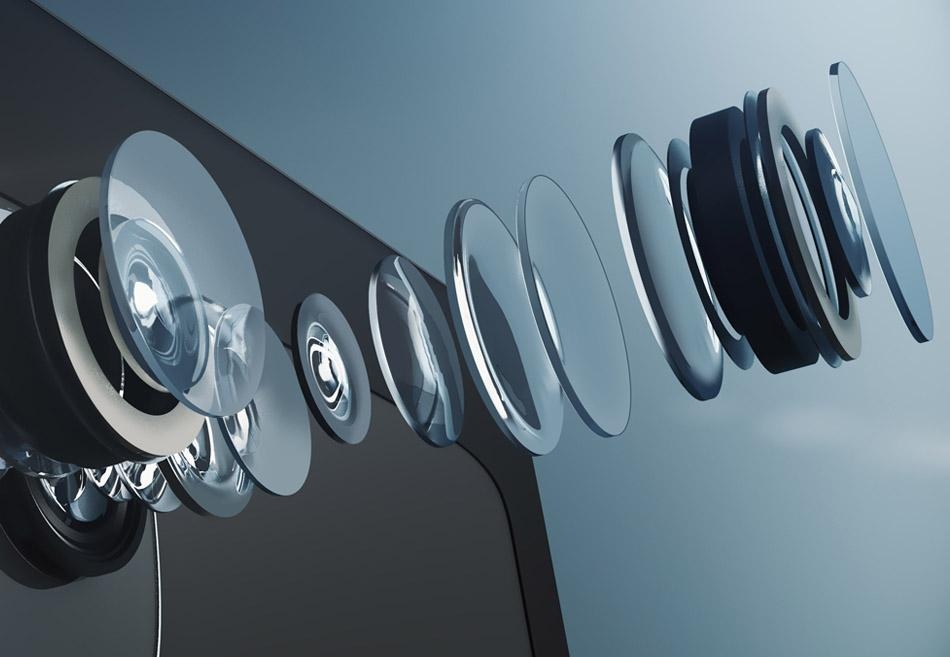
First, “Plastic” Doesn't Mean Ordinary Plastic
When people hear “plastic lens,” they often imagine a cheap transparent piece of plastic.
Optical plastics are a different category.
Materials such as optical-grade polymers can be engineered to provide controlled refractive and mechanical properties suitable for imaging applications.
They can also be manufactured with complex optical geometries.
This is particularly important because many modern compact camera lenses use highly optimized molded optical elements.
So the real comparison is not:
Glass vs cheap plastic.
It is:
Optical glass vs optical polymer materials.
That's a much more interesting question.
Why Glass Has Such a Strong Reputation
Glass has been used in optical systems for centuries, and there is a good reason.
Optical glass offers several important advantages.
It can provide excellent optical stability and a wide range of refractive properties.
Glass is also relatively stable over temperature compared with many polymers.
For demanding imaging applications where optical performance must remain highly predictable across changing environmental conditions, glass can be extremely valuable.
This is one reason high-performance photographic, scientific, industrial, and certain automotive optical systems may use substantial amounts of glass.
But glass has its own disadvantages.
It is heavier.
It can be more expensive to process.
Complex shapes may require more involved manufacturing processes.
And producing complicated optical geometries at high volume can become costly.
Plastic Has One Very Big Advantage: Manufacturing Freedom
One of the biggest strengths of optical plastics is not simply low cost.
It is manufacturing flexibility.
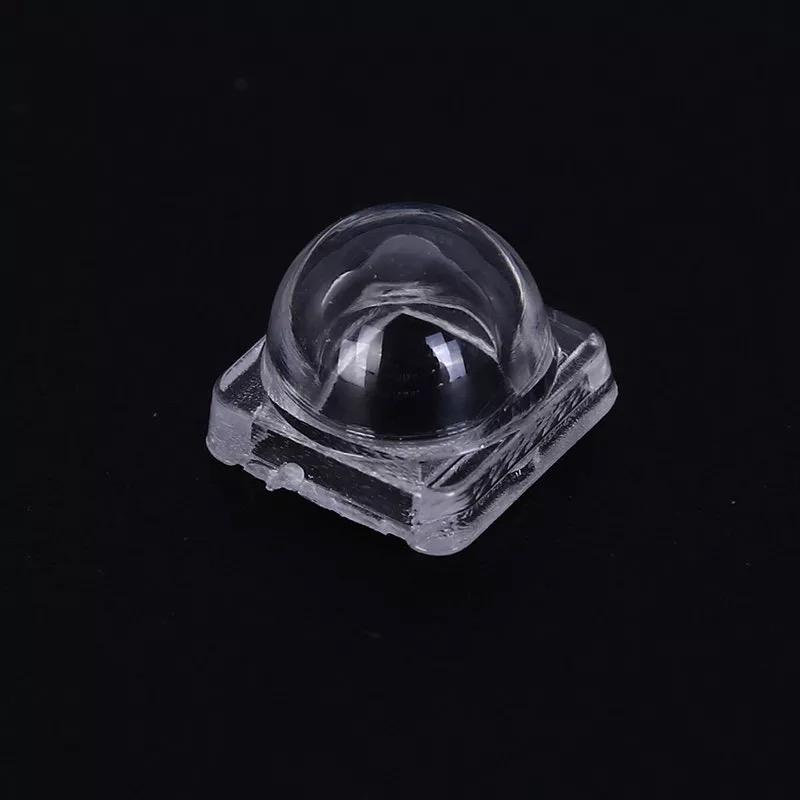
Optical plastic elements can often be produced through precision injection molding.
That means complex optical geometries can potentially be manufactured at high volume once the tooling is established.
This is particularly attractive for compact consumer and embedded cameras.
If a camera needs hundreds of thousands or millions of lenses, manufacturing efficiency matters enormously.
A small difference in unit cost becomes a very large number when multiplied by a million.
This is where plastic optics can make a lot of sense.
Plastic Can Also Make Cameras Lighter
Weight matters more than people sometimes realize.
For a smartphone, every gram matters.
For a drone, it matters even more.
For a wearable device or compact robot, unnecessary weight is not particularly welcome either.
Optical polymers are generally much lighter than glass.
This creates an obvious advantage for systems where:
small + light + high volume
is more important than absolute optical performance under extreme conditions.
For a drone camera, for example, saving weight from the optical module can contribute to the overall system design.
That doesn't mean plastic is always the right answer.
It means material selection should consider the entire product.

So Where Does Glass Win?
Glass becomes especially attractive when environmental and optical stability are major concerns.
Temperature is a good example.
Every material changes dimensionally with temperature.
The amount of change depends on the material.
Because optical systems are highly sensitive to geometry, temperature-related changes can influence focus and optical performance.
This matters for cameras operating outdoors, inside vehicles, industrial environments, or other applications with significant temperature variation.
Glass can offer advantages in this area, depending on the specific material and optical design.
Glass may also provide broader options for certain demanding optical requirements.
So if someone tells you:
“Plastic is always better because it's cheaper.”
That is just as misleading as saying:
“Glass is always better because it's glass.”
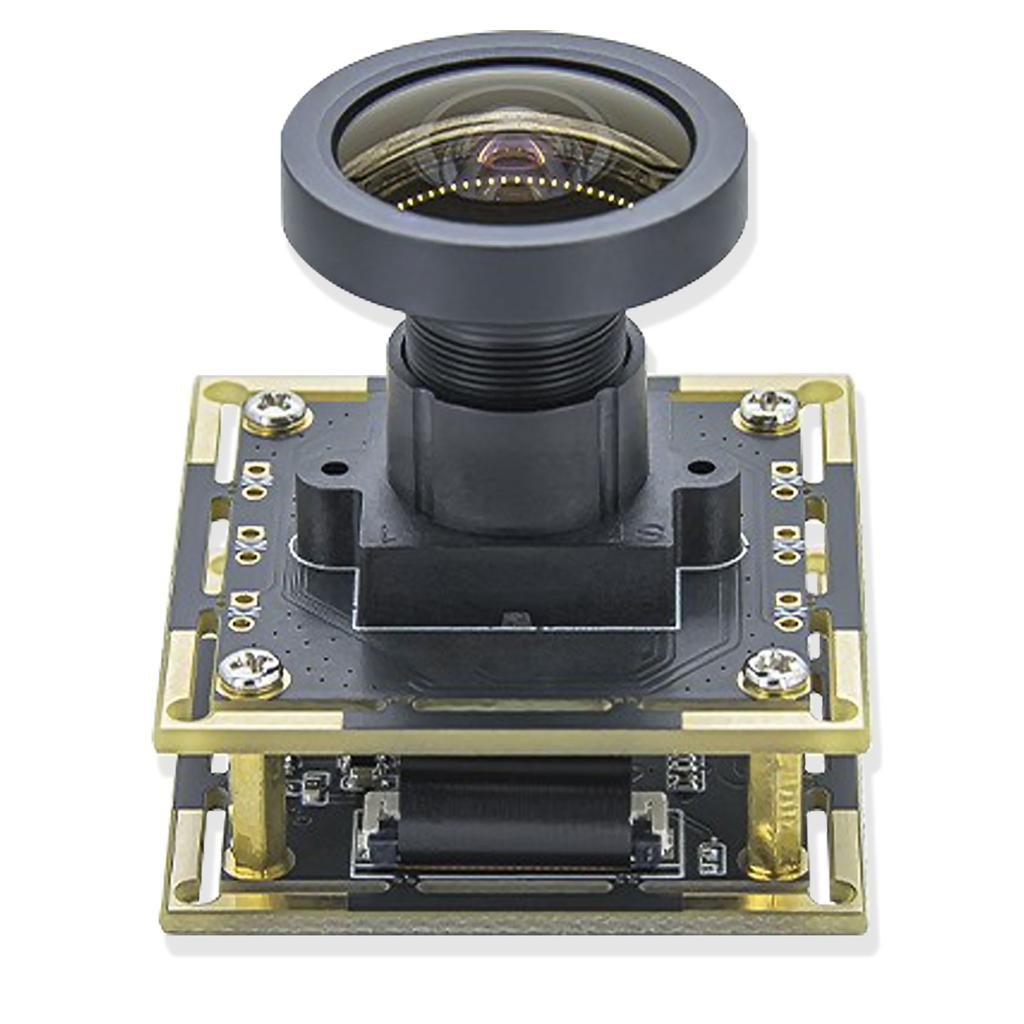
Plastic Can Also Be More Sensitive to Aging
Environmental durability is another consideration.
Some optical polymers can be more sensitive than glass to:
Temperature
Humidity
UV exposure
Chemical environments
The actual behavior depends heavily on the material formulation and application.
This is why an optical plastic that performs perfectly inside a consumer device may not necessarily be the best choice for an outdoor camera exposed to years of sunlight and temperature cycling.
Material selection needs to consider the intended lifetime.
A lens that looks excellent on day one is not necessarily a good lens if its performance changes significantly after years of environmental exposure.
The Interesting Part: Many Camera Lenses Use Both
This is where the simple “plastic vs glass” debate starts to fall apart.
Many optical systems do not need to choose one material exclusively.
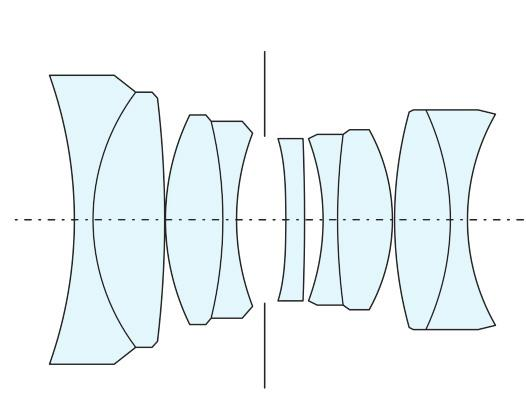
A lens can use a combination of glass and optical plastic elements.
Why?
Because different materials can solve different optical problems.
A designer may use one material for a particular refractive characteristic and another for a different requirement.
This can provide a useful balance between:
Optical performance
Size
Weight
Cost
Manufacturability
Environmental stability
In other words, the smartest lens may not be made entirely from glass or entirely from plastic.
It may use exactly what the optical design needs.
What About Resolution?
This is another area where the conversation often becomes misleading.
People sometimes assume:
Glass = high resolution
Plastic = low resolution
Not necessarily.
Resolution depends on the complete optical design and manufacturing quality.
Factors such as:
Lens geometry
Surface accuracy
Material properties
Assembly precision
Optical alignment
MTF performance
Sensor characteristics
all matter.
A poorly designed glass lens can perform badly.
A well-designed molded optical plastic element can perform surprisingly well.
The material is important.
But it is only one part of the equation.
Why Optical Plastic Is Important for Mass-Produced Cameras
Consider a camera module that needs to be produced in very large quantities.
The manufacturer may care about:
Cost + weight + cycle time + repeatability + optical performance.
This is where molded plastic optics can become extremely attractive.
Once precision tooling has been developed, injection molding can support high-volume production with consistent geometry.
This is particularly relevant for applications such as:
Consumer cameras
Security cameras
Automotive modules
Drones
Robotics
Smart devices
Compact machine vision systems
Manufacturing technology is therefore one of the major reasons plastic optics have become so common.
How Should Engineers Actually Choose?
Instead of asking:
“Is glass better than plastic?”
I'd ask:
“Which material is better for this optical system?”
For a compact, lightweight, high-volume camera, optical plastic may be an excellent choice.
For a demanding outdoor system operating across extreme temperatures, glass may offer important advantages.
For some products, a hybrid design may make the most sense.
At Boshi Optics, material selection is part of the broader optical design problem rather than a simple “glass is premium, plastic is cheap” decision. The appropriate solution depends on sensor requirements, optical performance, mechanical constraints, environmental conditions, production volume, and target cost.
That is how optical engineering usually works.
There is rarely one material that wins every argument.
The Bottom Line
So, are plastic camera lenses really inferior to glass?
No.
Glass is an exceptional optical material, and it remains indispensable in many demanding applications.
But optical plastic has its own strengths:
Lightweight.
Highly manufacturable.
Suitable for complex molded geometries.
Well suited to high-volume production.
Potentially cost-effective.
The important question is not which material sounds more premium.
It is whether the material can deliver the required optical performance, stability, manufacturability, and lifetime for the actual camera.
Because a camera lens does not get extra points for being made from glass.
It gets judged by the image it produces—and whether it keeps producing that image reliably after the first prototype, the hundredth production batch, and the millionth unit.