

Fixed-Focus vs. Varifocal Lenses: Which Is Better for Your Camera
A camera project can have the right sensor, processor and housing and still deliver the wrong view of the scene. One early decision that strongly influences the result is whether to use a fixed-focus lens or a varifocal lens. The terms are sometimes used loosely, so it is worth separating two ideas: focus adjustment changes the distance at which the image is sharp, while focal-length adjustment changes the field of view. A lens can be focused during installation without being varifocal. A true varifocal lens allows its focal length, and therefore its framing, to be adjusted over a defined range.
Neither design is automatically better. A fixed-focal-length lens is often practical when the camera position and required coverage are known. A varifocal lens can be useful when installation conditions vary or the final viewing angle cannot be established in advance. The right choice depends on the application, production volume, mechanical envelope and how much adjustment the user genuinely needs.
1. Focus adjustment is not the same as zoom
A fixed-focal-length lens has one designed focal length. Its field of view is determined by that focal length and the active sensor dimensions. During installation, the lens may still require focusing so that the target plane is sharp. On compact board cameras, this may involve rotating the lens in its holder and then securing it.
A varifocal lens has a range of focal lengths, such as a shorter setting for a wider view and a longer setting for a narrower view. Changing focal length changes image magnification and framing. The installer may then need to refocus, depending on the optical design. A varifocal lens should also not be confused with a motorized zoom lens: varifocal adjustment may be manual, while motorized zoom adds actuators and control electronics. This distinction matters when writing a specification because “adjustable focus” and “adjustable field of view” describe different functions.
2. When a fixed-focal-length lens makes sense
Fixed-focal-length designs are attractive when the camera's mounting position, target distance and required coverage are stable. The optical design can be optimized around one focal length and one sensor format rather than a range. That can make it easier to control size, cost, distortion and image quality for a defined application.
This is relevant to high-volume embedded cameras. A doorbell camera, compact IP camera, dash camera or dedicated inspection module may have a fixed mechanical position and a well-defined scene. Once the field of view is validated, an adjustable focal length may add complexity without improving the product. Fixed designs can also simplify assembly and reduce the number of adjustments that must be made consistently on the production line.
The limitation is flexibility. If the camera is later installed farther from the target, or the customer changes the required coverage, a fixed lens may not provide the desired framing. The project may need a different focal length or a redesigned mounting position. It is therefore important to confirm the installation geometry before locking the lens specification.
3. Where varifocal lenses are useful
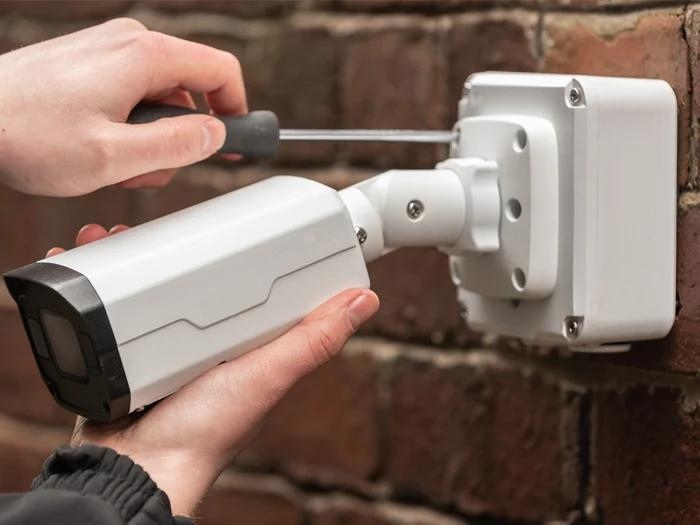
Varifocal lenses are valuable when installation geometry is uncertain or differs from site to site. A security integrator may need to frame a doorway, loading bay or perimeter area after the camera has been mounted. A variable focal length can help the installer trade coverage for detail without physically relocating the camera.
They can also be useful during pilot deployments. A customer may know the approximate scene but not the final camera-to-subject distance. An adjustable lens allows the team to evaluate different views before freezing the specification. However, the adjustment range must be appropriate. A wide range printed on a datasheet does not guarantee that the lens will deliver acceptable resolution, distortion or edge performance at every setting.
For projects that use varifocal optics, ask for image-quality evidence at the wide, middle and telephoto ends of the range. Check whether focus must be readjusted after focal-length changes, how the setting is locked, and whether the adjustment can be performed after the camera is installed in its housing.
4. Compare the complete imaging system
The sensor format is a starting point because it affects the image area used by the lens. For a given focal length, a larger active sensor generally captures a wider field of view than a smaller one. Horizontal and vertical fields of view should be calculated using the actual active image dimensions, not just the sensor's nominal format.
Next, define the scene. Record the camera mounting height, target distance, required horizontal coverage and the smallest object or feature that must be recognized. A wide view may include the entire scene but leave a target too small for identification. A narrower view may improve pixel density on the target but miss activity near the edges. This is an application trade-off, not a simple question of which lens has the largest angle.
For a varifocal system, check image quality at multiple focal-length settings. For a fixed lens, evaluate the actual installation distance and target region. In both cases, assess center and edge sharpness, distortion, relative illumination, chromatic aberration and performance under the intended lighting. If the camera includes a cover window, test with that window installed.
5. Optical and mechanical considerations
A varifocal assembly usually contains more moving or adjustable elements than a simple fixed-focal-length board lens. The mechanical design must maintain alignment while the user changes the setting. The adjustment mechanism should resist unintended movement after installation, and the housing must provide enough access for the installer without compromising sealing or protection.
A fixed lens is not automatically free of mechanical risk. Focus position, thread engagement, adhesive or locking method, barrel dimensions and assembly tolerances all affect the final camera. If the lens is adjusted during production, the process needs a repeatable focus target and a defined locking procedure. If it is adjusted in the field, the installer needs clear instructions and a way to verify the result.
Environmental conditions also matter. Vibration, temperature cycling, dust and moisture can affect the camera assembly. For outdoor or vehicle applications, evaluate the complete module and its retention method under the actual qualification conditions. Do not assume that a lens is environmentally qualified simply because it fits the camera housing.
6. Cost, production and serviceability
For a mass-produced camera, compare total system cost rather than the lens unit price alone. A varifocal design may reduce installation visits or avoid stocking several fixed focal lengths. On the other hand, it can increase the cost of the optical assembly, housing, adjustment process and quality control. It may also require more installer training.
A fixed lens can be efficient when the product is standardized and the camera is assembled in large quantities. The manufacturer can establish a repeatable optical and mechanical setup and verify it with defined tests. This is especially useful when the end user does not need to change framing after installation.
Service strategy should be included in the decision. If cameras are frequently repositioned or reused at different sites, adjustment flexibility may have real value. If a camera is sealed into a product and never touched again, the added adjustment range may not justify its cost. Buyers should consider installation labor, replacement stock, service calls and production yield alongside the quoted lens price.
7. A practical selection checklist
Before requesting a quotation, prepare the sensor model and active image dimensions, required horizontal and vertical field of view, target distance, camera-to-subject geometry, minimum object size, available lens envelope and mounting interface. State whether focal length must be adjustable after installation or whether focus adjustment during assembly is sufficient.
For a varifocal proposal, specify the required focal-length range and ask for field-of-view values at representative settings. Request image-quality evidence across the range rather than relying on one sample image. For a fixed lens, provide the exact target coverage and distance so that the supplier can recommend a suitable focal length. In either case, define operating temperature, vibration exposure, illumination range and acceptance criteria.
A useful evaluation uses the final sensor, housing, protective window and image-processing settings. A lens that looks suitable on an optical bench may behave differently after integration, particularly if the camera includes a cover window or a tightly constrained mechanical package.
Working with Boshi Optics
Boshi Optics supplies camera lens products for security, automotive, drone and embedded imaging applications, and supports customized optical discussions when a standard configuration does not meet system requirements. For a project comparing fixed and adjustable options, the most useful starting information is the sensor, field of view, target distance, available package dimensions and expected production volume.
Explore the [Boshi Optics camera lens product range](https://www.lensmanufacture.com/products/lens.html) and [customized optical products](https://www.lensmanufacture.com/customized-products). These pages provide a starting point for discussing a suitable configuration; final selection should be based on the camera's actual optical and mechanical requirements.
Conclusion: choose the adjustment you will actually use
A fixed-focal-length lens and a varifocal lens solve different problems. Fixed focal length is often the stronger choice for a repeatable camera design with known geometry and high-volume production. Varifocal adjustment is useful when framing must be tuned on site or when deployment conditions vary. The best decision is made by defining the required image first, then checking optical performance, mechanics, installation workflow and total system cost.
If focal length does not need to change after installation, a fixed design may be simpler and more economical. If framing uncertainty is a genuine project risk, a varifocal lens may save time and improve deployment flexibility. In either case, validate the complete camera rather than choosing from a focal-length label alone.