

How Does an IR-Cut Filter Affect Day and Night Camera Imaging
Introduction: Why Does a Camera Need to Treat Infrared Light Differently?
A surveillance camera is expected to produce a natural-looking image in daylight and remain useful after the sun goes down. These two operating conditions create a challenge that is easy to overlook: the image sensor may respond to light beyond the range of human vision.
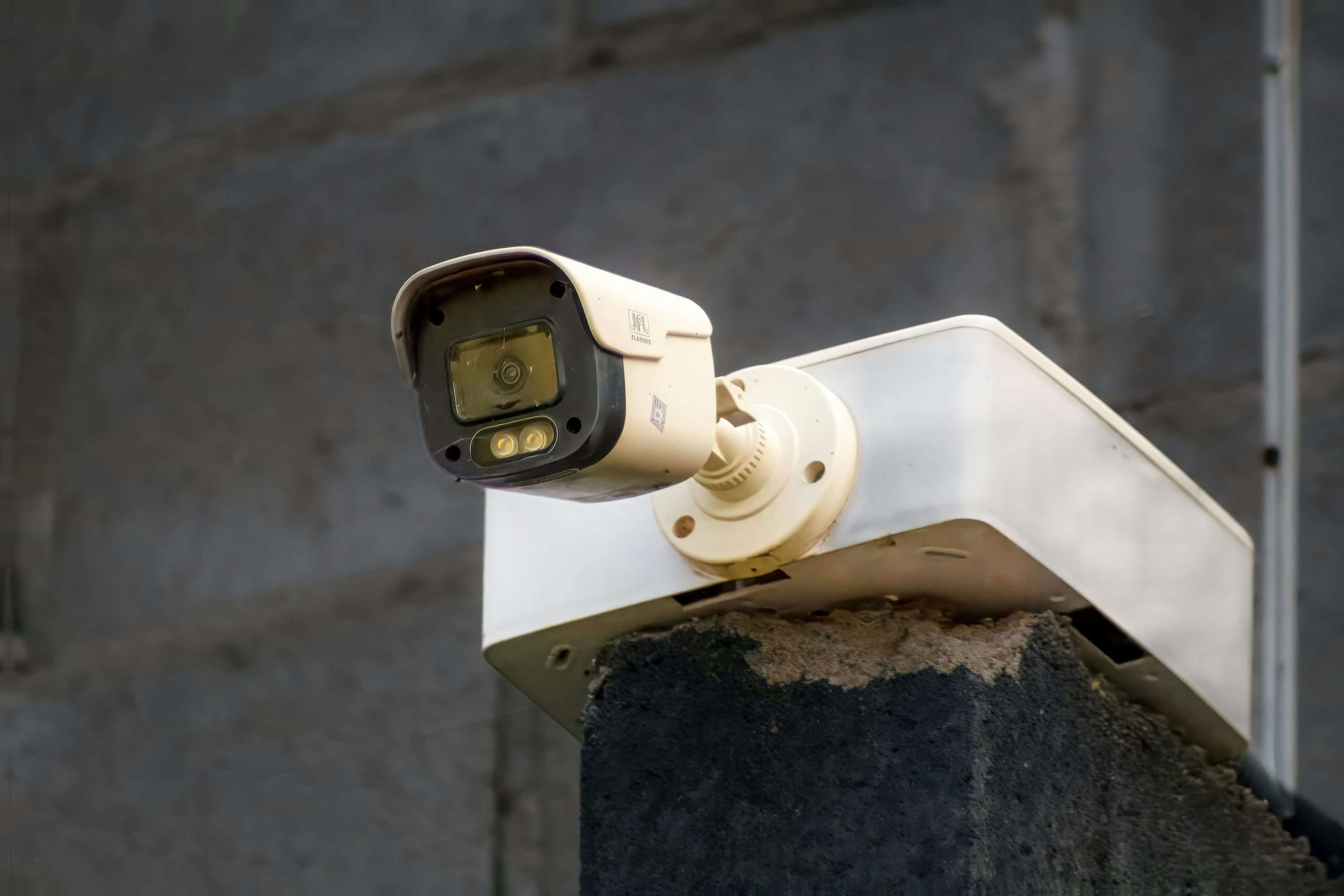
Many image sensors are sensitive to near-infrared radiation. This can be useful when a camera is designed for infrared illumination, but it can also affect color reproduction in daylight. Materials that look similar to the human eye may reflect infrared energy differently, so foliage, fabrics, skin tones, and other objects can appear with unusual colors if near-infrared light reaches the sensor.
An IR cut filter is commonly used to control this unwanted infrared energy. In a day/night camera, the filter may be moved into or out of the optical path depending on the lighting condition. The filter is a small component, but its behavior affects the complete imaging system.
For camera manufacturers and optical buyers, the important point is that the filter, lens, sensor, and switching mechanism should be considered together. Choosing each component independently can lead to color shifts, focus changes, or inconsistent image quality.
What Is an IR Cut Filter
An IR cut filter is an optical filter designed to transmit visible light while reducing transmission in a specified infrared region. The exact cut-off characteristics depend on the filter design and intended sensor response.
In a conventional color camera, controlling near-infrared energy helps the sensor reproduce colors more consistently with what people see. Without a suitable IR cut filter, infrared sensitivity can influence the red, green, and blue channels and create color errors that image processing may not fully correct.
A fixed filter is often sufficient for cameras that operate in one defined lighting mode. A day/night camera, however, may use a switching arrangement. During the day, the IR cut filter is placed in front of the sensor to support more accurate color imaging. At night, it is moved away so that the sensor can receive more near-infrared energy, often from IR LEDs.
This switching design is commonly described as an ICR mechanism. The mechanical movement may be small, but the repeatability of the filter position and the stability of the optical assembly are important to the final result.
Why Daytime Color Depends on Infrared Control
A camera sensor does not see the world exactly as the human eye does. Its spectral response can extend into near-infrared wavelengths, depending on the sensor construction and any filters in the module.
When infrared energy reaches a color sensor, it can influence the measured channel values. A white object under sunlight may reflect visible and infrared energy in a different proportion from a colored object. The camera can therefore record colors that look unnatural, even when exposure and white balance appear reasonable.
A correctly specified IR cut filter helps limit this effect. It supports more stable color reproduction and makes the camera's output easier to process consistently across different scenes.
However, an IR cut filter is not a universal color-correction solution. Lens transmission, sensor spectral response, illuminant type, cover glass, and image signal processing all contribute to the final color. If a project has demanding color requirements, the complete module should be evaluated under representative daylight sources rather than relying on the filter's nominal cut-off value alone.
Why Night Imaging Needs a Different Optical Path
At night, a camera may rely on near-infrared LEDs to illuminate the scene. If the IR cut filter remains in place, much of the illumination may be rejected before it reaches the sensor. Removing the filter allows more of that energy to pass through the lens and reach the sensor.
This does not mean that every camera becomes equally effective at night once the filter is removed. The lens must transmit the relevant near-infrared wavelengths, the sensor must have suitable sensitivity, and the illumination must cover the required scene.
A lens optimized only for visible light may not deliver the same focus or image quality in near-infrared operation. Some optical systems exhibit a focus difference between visible and near-infrared wavelengths. This is why an IR corrected lens can be important in cameras that need useful images in both modes.
When specifying a day/night camera lens, confirm the wavelength range that matters to the project. Do not assume that the phrase "supports IR" provides enough technical detail. Ask for the intended operating band and the conditions under which focus and image quality are evaluated.
The Focus Shift Problem: Visible Light and Near-Infrared Are Not Identical
Different wavelengths can focus at different positions because optical materials refract light differently across the spectrum. This behavior is known as chromatic aberration. In a camera that changes from visible-light imaging to infrared-assisted night imaging, a focus position that looks correct during the day may not remain ideal at night.
The size of the effect depends on the optical prescription, material selection, aperture, wavelength range, and sensor configuration. It may be more noticeable in applications that require fine detail or use a relatively large aperture.
Optical designers can manage this behavior by selecting suitable materials and balancing the optical design across the intended spectral range. A practical evaluation should include both visible and near-infrared images, using the actual IR cut filter arrangement and sensor.
For procurement teams, this means that a lens should not be approved solely from a daytime image sample if the final camera is expected to switch to infrared operation. Request evidence from both modes and check whether the focus mechanism or lens design is intended to support the full operating range.
Mechanical Reliability of the ICR Mechanism
The filter switching mechanism introduces a mechanical requirement in addition to the optical one. The filter needs to move to the correct position and remain stable there. If the mechanism is poorly aligned, slow, noisy, or inconsistent, the camera may show visible artifacts or fail to switch reliably.
The mechanism also operates inside a compact camera housing, where available space, temperature, vibration, and long-term cycling may affect reliability. A camera used outdoors can experience repeated day/night transitions and a wide range of environmental conditions.
During product development, teams should consider switching life, position repeatability, operating temperature, vibration exposure, and the mechanical interface between the filter holder and camera module. The test plan should reflect the expected duty cycle rather than only a few manual switching demonstrations.
The optical and mechanical teams should also coordinate the filter's clear aperture and position. A filter that is technically suitable but partially clips the optical path can reduce illumination or create uneven image behavior.
What Should Buyers Confirm Before Selecting a Day/Night Lens?
A useful request for quotation should describe the camera system and its operating conditions. The following information helps a lens supplier assess the requirement:
Sensor model, format, pixel size, and spectral response if available.
Whether the camera uses a fixed IR cut filter or a movable ICR mechanism.
Required visible and near-infrared wavelength ranges.
Lens focal length, field of view, aperture, and mechanical envelope.
Whether the camera uses built-in IR LEDs and the approximate illumination wavelength.
Required focus behavior in day and night modes.
Operating temperature and expected switching frequency.
Image-quality targets, including center and edge performance.
It is also useful to provide sample images or describe the target scene. A camera intended for a residential entrance may have different priorities from a traffic camera or an industrial monitoring system.
Avoid comparing lenses only by focal length and aperture. Two lenses with similar headline specifications can behave differently when paired with a particular sensor and IR cut filter stack.
How to Validate the Complete Camera
A practical validation plan should include daytime color scenes, low-light scenes, and infrared-assisted night scenes. Capture targets at the center and edges of the image, and inspect both sharpness and color behavior.
For day mode, check whether neutral objects appear reasonably neutral and whether colors remain consistent under the intended lighting. For night mode, inspect focus, contrast, illumination uniformity, and the amount of useful detail. If the camera switches automatically, repeat the transition several times and observe whether the image returns consistently to the same state.
Testing should use the final lens, IR cut filter, sensor, cover window, and housing wherever possible. Changing one of these components after validation can alter the result. This is especially important when the camera has a tight mechanical package or a demanding environmental specification.
Working With Boshi Optics
Boshi Optics develops and manufactures optical products for security surveillance, automotive electronics, medical imaging, and other camera applications. For a day/night camera project, the optical discussion should begin with the sensor, IR cut filter arrangement, operating wavelengths, field of view, and mechanical dimensions.
Customers can review Boshi Optics' M12 lens range or discuss an application-specific requirement through customized optical products. Sharing the complete camera configuration helps the Boshi Optics team assess whether a standard lens is suitable or whether a customized optical solution should be considered.
Conclusion: Treat the IR Cut Filter and Lens as One Imaging System
An IR cut filter is not simply an accessory added to make a camera switch between color and monochrome images. It changes the spectral energy reaching the sensor and therefore affects color, sensitivity, and potentially focus behavior.
For reliable day/night imaging, specify the visible and infrared operating ranges, check the lens's spectral behavior, and validate the final camera in both modes with the chosen IR cut filter. The best result comes from treating the lens, filter, sensor, illumination, and switching mechanism as one coordinated system.