
M12 vs. CS-Mount Lenses: Which Interface Is Right for Your Camera
Introduction: A Mount Is More Than a Thread
When a camera engineer compares two lenses, optical specifications usually get most of the attention. Focal length, aperture, field of view, resolution, and distortion are all important. Yet before any of those specifications can be used, the lens has to fit the camera mechanically.
This is where the lens interface matters. M12 and CS-mount are two common interfaces used in compact cameras and machine vision or surveillance equipment. They are not interchangeable simply because both can be found on small camera systems.
Choosing the wrong interface can lead to an assembly that cannot reach focus, a lens that sits at the wrong distance from the sensor, or a housing that needs to be redesigned. The correct choice depends on the camera architecture, optical requirements, available space, and production process.
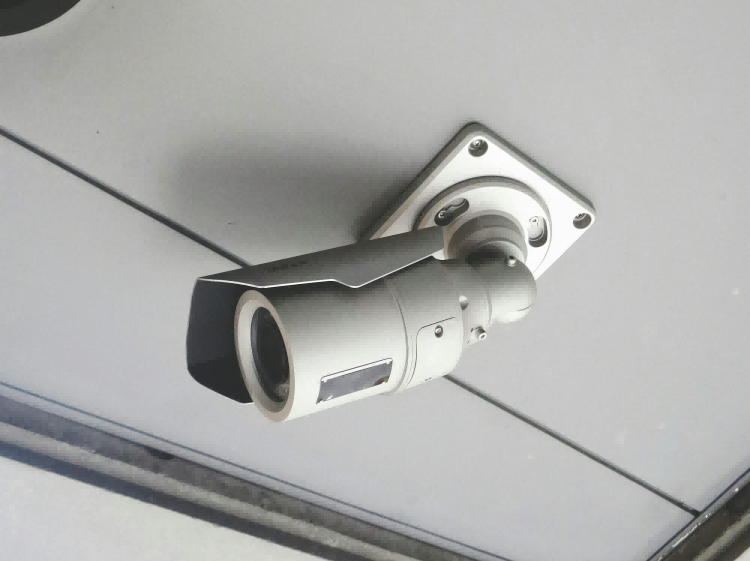
This article explains the practical differences between an M12 lens mount and a CS-mount system, what buyers should verify, and how to avoid compatibility assumptions during development.
What Is an M12 Lens?
An M12 lens is commonly associated with a small threaded interface, often called an S-mount or board lens. The “M12” name refers to a nominal 12 mm thread diameter; the exact thread pitch and mechanical drawing should still be confirmed for the specific product.
M12 lenses are widely used in compact camera modules, security cameras, smart devices, drones, and other applications where size and integration flexibility are important. The lens can be secured in a threaded holder or lens barrel, and focus is often adjusted by rotating the lens during assembly.
The compact format can help camera designers reduce package size and simplify integration. It also provides a broad ecosystem of lens options, including wide-angle, low-distortion, and application-specific designs.
However, M12 does not define optical performance. Two M12 lenses can differ significantly in sensor coverage, image quality, field of view, distortion, aperture, and mechanical length. The mount is only one part of the specification.
What Is a CS-Mount Lens?
CS-mount is a standardized camera lens interface commonly used in CCTV and industrial imaging systems. It uses a larger threaded connection than an M12 board lens and has a defined flange focal distance between the mounting reference surface and the image plane.
The standard CS-mount flange focal distance is 12.5 mm. A related C-mount interface uses a 17.526 mm flange focal distance. C-mount lenses can generally be used on CS-mount cameras with an appropriate 5 mm spacer, but the reverse combination is not directly compatible without an optical or mechanical solution. Always confirm the camera manufacturer's specifications before assembly.
CS-mount systems are often selected when a camera platform needs a more established interchangeable-lens arrangement, a larger mechanical interface, or compatibility with a particular class of industrial or surveillance equipment.
As with M12, the interface alone does not guarantee sensor coverage or image quality. The lens must still be matched to the sensor format and camera requirements.
Key Differences Between M12 and CS-Mount
The most visible difference is mechanical scale. M12 is compact and commonly integrated into board-level camera assemblies. CS-mount uses a larger interface and a defined flange focal distance that is important for focus and interchangeability.
The focusing approach can also differ. M12 lenses are often focused by rotating the threaded lens within a holder and then securing it. CS-mount lenses are attached to a standardized camera mount, and focusing is typically adjusted through the lens's focusing mechanism or the camera arrangement.
The two formats may also lead to different product architectures. An M12 lens can be attractive when the camera must be small, lightweight, and cost-conscious. A CS-mount design may be more convenient when the system is built around interchangeable lenses or needs to support a familiar industrial camera interface.
Neither interface is inherently better. The correct choice depends on the mechanical envelope, optical requirements, maintenance plan, and target market.
Compatibility: Five Checks Before Ordering
First, confirm the exact mount specification. Do not rely on a product title alone. Ask for the mechanical drawing, thread details, reference surface, and any required holder or spacer.
Second, check flange distance and focus travel. The lens must be able to focus at the intended image plane. A mechanical fit does not prove that the optical system can reach focus.
Third, verify sensor format and image circle. A lens designed for a smaller sensor may produce vignetting on a larger sensor. A lens that covers the sensor may still have weak edge performance if it was not designed for the required image quality.
Fourth, check the sensor's optical characteristics, including pixel size and chief ray angle requirements where relevant. The lens should be evaluated as part of the sensor-lens combination.
Fifth, consider the camera housing. The lens may fit the mount but collide with a front cover, protective window, filter holder, or internal component. Confirm the full mechanical stack-up, not only the thread.
These checks are particularly important for OEM projects, where a small dimensional mismatch can affect tooling, assembly time, and production yield.
How the Interface Affects Manufacturing and Assembly
The lens interface influences more than the drawing. It affects how the camera is assembled, focused, secured, and serviced.
For M12 assemblies, thread engagement, holder quality, lens rotation, adhesive selection, and focus locking can all influence repeatability. If the lens is rotated to set focus, the production process should control the adjustment and prevent unwanted movement after curing or locking.
For CS-mount assemblies, the camera's mounting reference and flange distance become central to focus control. The lens and camera must be manufactured and assembled to the appropriate mechanical tolerances. If an adapter or spacer is used, its thickness and parallelism should be included in the tolerance analysis.
In either case, production teams should define a repeatable focusing method and verify the final image after assembly. A lens that performs well in a hand-built sample may require a more controlled process to achieve consistent results at volume.
Which Mount Is Better for Different Applications?
M12 is often a practical choice for compact surveillance cameras, smart home cameras, drones, embedded vision, and other small camera modules. It is particularly attractive when the design has a fixed lens requirement and the camera maker wants to optimize size and integration.
CS-mount can be suitable for industrial cameras, certain CCTV platforms, and systems where users may need to change lenses or work with a standardized camera body. It can also be useful when the mechanical architecture already supports CS-mount accessories.
The application should decide the interface. A drone may prioritize low weight and compactness. An industrial inspection camera may prioritize lens interchangeability and a stable mounting reference. A security camera OEM may already have a mature M12 housing and assembly process.
For a new design, compare the complete system cost: lens, holder, camera housing, assembly process, adjustment time, and service requirements. The lowest unit price for the lens does not always produce the lowest total product cost.
What Information Should Be Included in an RFQ?
When requesting a quotation, include the camera sensor model, sensor format, pixel size, target resolution, field of view, working distance, and operating environment. State clearly whether the required interface is M12, CS-mount, or another standard.
Attach the mechanical drawing if available. Include the available lens length and diameter, the position of the sensor plane, and any cover glass or filter in front of the sensor. If the project has a focus adjustment or locking requirement, describe the production method.
For an existing camera, a sample housing or reference lens can help clarify the interface. For a new camera, provide the 3D envelope and key dimensions early enough for the optical and mechanical teams to review together.
A clear RFQ makes it easier to identify a standard lens candidate and reduces the risk of evaluating an optically suitable but mechanically incompatible product.
Boshi Optics M12 Lens Options and Customization
Boshi Optics offers a range of compact M12 optical products for applications such as security monitoring, smart devices, drones, and other embedded imaging systems. Buyers can explore the M12 interface lens range and the company's customized optical products.
For a project-specific recommendation, provide the sensor model, required field of view, mechanical envelope, working distance, and target image quality. If the camera uses a CS-mount or another interface, state that clearly so the mechanical configuration can be reviewed before sample evaluation.
Conclusion: Choose the Interface Before the Housing Is Locked
M12 and CS-mount solve different integration needs. M12 supports compact board-level camera designs, while CS-mount offers a standardized interface used in a range of CCTV and industrial camera systems.
The best choice is the one that fits the optical, mechanical, and manufacturing requirements of the complete camera. Confirm the thread or mount standard, flange distance, sensor coverage, focus method, and housing clearance before ordering samples.
A few minutes spent checking the interface can prevent much more expensive changes after the camera design has entered tooling or mass production.