
Why System Compatibility Matters More Than Individual Specifications
A camera project can look perfect on paper.
The sensor has the required resolution. The lens has the specified focal length. The mounting thread fits. The budget is approved.
Yet the first sample produces disappointing images.
The corners are blurry. The image is darker than expected. Focus changes when the camera temperature rises. Or the lens captures a different area of the scene than the engineering team anticipated.
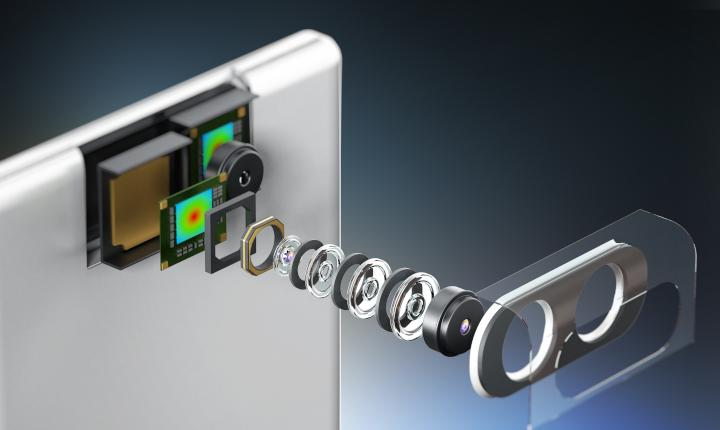
These problems do not necessarily mean the lens is defective. Sometimes, the issue is that the lens was selected as an individual component rather than evaluated as part of a complete imaging system.
For camera manufacturers and product developers, this distinction matters. A good lens specification is not the same as a well-matched camera system.
1. Why Matching the Megapixel Rating Is Not Enough
One common approach to lens selection is to match the lens's advertised megapixel rating to the camera sensor.
It is a useful initial filter, but it does not guarantee the expected image quality.
The actual result depends on several factors, including pixel size, optical resolution, contrast, image-field position, sensor characteristics, and image processing.
Consider a camera using a high-resolution sensor. The center of the image may look sharp, while fine details near the corners appear softer. A single megapixel label cannot fully describe this difference.
This is why engineers often evaluate modulation transfer function (MTF), which describes how well an imaging system reproduces contrast at different spatial frequencies.
The practical question is not simply whether a lens supports a particular megapixel count. It is whether the lens can deliver the required detail across the image area that matters to the application.
For a security camera, corner performance may affect the ability to recognize details across a wide scene. For an inspection camera, image quality in a specific measurement region may be more important.
The correct evaluation criteria depend on what the camera must actually do.
2. Field of View Depends on More Than Focal Length
A 2.8 mm lens is often associated with wide-angle imaging, while a longer focal length generally captures a narrower field of view under comparable conditions.
However, focal length alone does not determine the final field of view.
Sensor dimensions also matter. So does the physical arrangement of the camera relative to the target.
Imagine two camera modules using lenses with the same focal length. If their sensors have different active dimensions, they will not necessarily capture the same horizontal or vertical scene area.
Working distance introduces another practical consideration. A lens that covers the desired area at one distance may capture too much or too little when the camera is installed elsewhere.
Before finalizing a lens, confirm three things:
The sensor's active imaging dimensions
The required horizontal and vertical field of view
The working distance between the camera and the target
If possible, provide a sketch of the intended installation or a photograph showing the camera's position.
These details help the optical team evaluate whether the proposed focal length is appropriate instead of relying on a nominal specification alone.
3. The Mechanical Fit Can Affect Optical Performance
A lens may have the correct thread and still be unsuitable for a particular camera module.
Mechanical compatibility involves more than whether the parts can be screwed together.
The available space, lens-to-sensor distance, mounting tolerances, housing design, and focus adjustment method can all affect the final assembly.
For example, a compact product may impose a strict limit on total track length (TTL). A lens that meets the optical requirements but exceeds the available space is not a practical solution.
Similarly, a change to a housing or mounting structure may alter the position of the lens relative to the sensor.
For a custom project, it is worth sharing the mechanical drawing before the optical design is finalized.
Important details include the mount type, maximum lens dimensions, sensor position, available adjustment range, and any restrictions imposed by the housing.
This is particularly relevant for compact security cameras, automotive imaging modules, embedded vision devices, and medical endoscope systems.
The earlier optical and mechanical requirements are considered together, the lower the risk of discovering an integration problem after samples have been manufactured.
4. Lighting Conditions Can Change the Right Lens Choice
A lens intended for a well-lit indoor environment may not be the best choice for a camera operating outdoors at night.
Lighting conditions influence the optical requirements, but the solution is not always to choose the lens with the largest aperture.
A wider aperture can allow more light to reach the sensor, which is useful in low-light applications. However, image quality also depends on factors such as depth of field, aberration control, sensor sensitivity, exposure settings, and the intended working distance.
Infrared imaging introduces additional considerations.
For example, a camera using 850 nm or 940 nm infrared illumination may require a lens and filter configuration appropriate for that wavelength range. A system designed primarily for visible light should not automatically be assumed to deliver equivalent performance in near-infrared conditions.
For day-and-night security cameras, the lens, filter arrangement, sensor, and illumination strategy should be evaluated together.
The goal is not to maximize one specification in isolation. It is to achieve the required image under the actual operating conditions.
5. Temperature Stability Is a System-Level Requirement
Temperature can affect both optical and mechanical components.
Changes in material dimensions and refractive properties may shift the focal position or alter image quality as the environment changes. The magnitude of these effects depends on the optical design, materials, mechanical construction, and operating temperature range.
A lens that performs well during a short laboratory test at room temperature may therefore need additional evaluation before being used in an outdoor or automotive product.
For projects with demanding environmental requirements, specify the expected operating temperature range early.
The engineering team can then determine whether temperature-related focus shifts, material selection, mechanical compensation, or additional validation should be considered.
It is important not to assume that every lens needs an athermal design. The appropriate solution depends on the application, the acceptable performance variation, and the overall system requirements.
6. When Should You Choose a Custom Lens?
Not every camera project needs a new optical design.
A standard lens may be the most economical and practical choice when it already meets the sensor, field-of-view, mechanical, and environmental requirements.
Custom development becomes worth considering when existing products cannot meet one or more important constraints.
Typical reasons include:
A non-standard lens diameter or total track length
A specific field of view within a restricted mechanical envelope
Special wavelength or filtering requirements
Demanding image-quality requirements across the image field
Application-specific environmental conditions
Integration requirements that standard lenses cannot accommodate
There is also a commercial consideration.
A custom design may involve additional engineering, tooling, testing, and qualification work. Its suitability therefore depends on expected production volume, target cost, development schedule, and the value of meeting the specific requirements.
The best starting point is to define the required outcome and compare feasible options—not to assume that custom is always better than standard.
7. Evaluate the Lens as Part of the Complete Imaging System
Before approving a lens for mass production, consider how it performs in the intended camera configuration.
A useful evaluation process includes:
First, confirm compatibility.
Check the sensor, field of view, mount, mechanical dimensions, and spectral requirements.
Second, test representative samples.
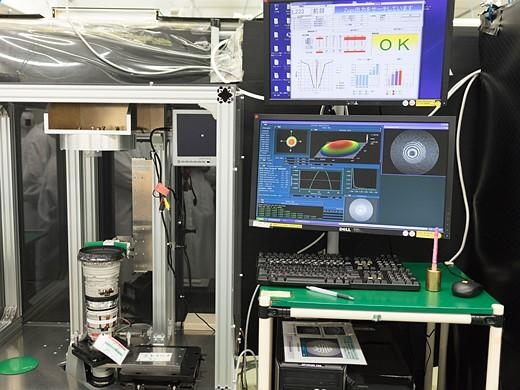
Evaluate images at the intended working distance, aperture, illumination, and relevant field positions.
Third, verify the important performance criteria.
These might include image detail, distortion, corner brightness, focus stability, or other application-specific requirements.
Finally, establish production acceptance criteria.
Once the sample is approved, document the relevant specifications and test conditions so that future production lots can be evaluated consistently.
The exact process will vary by application. A compact surveillance lens and a specialized medical imaging lens do not necessarily require the same qualification procedure.
What matters is that the acceptance criteria reflect how the camera will actually be used.
Building a Better Camera Starts with Better Optical Integration
At Boshi Optics, part of Shanghai Silk Optical Technology Co., Ltd., we work across optical lens design, development, and manufacturing for applications including security, automotive imaging, drones, medical endoscopes, and other imaging systems.
For projects with specific requirements, the most productive discussions begin with the complete application: the sensor, target field of view, working distance, available mechanical space, lighting conditions, operating environment, and expected production volume.
These details help determine whether an existing lens is suitable or whether a customized solution deserves further evaluation.
If you are developing a new camera or experiencing image-quality problems with an existing module, share your application details with Boshi Optics.
Our team can review the available requirements and discuss potential lens options, customization possibilities, and the next steps toward sample evaluation.
A successful lens project does not start with the longest specification sheet. It starts with understanding what the camera needs to achieve.
Explore our customized optical solutions or contact Boshi Optics through our official website to discuss your project.